
Garage Door Track Repair & Realignment in Los Angeles
Binding, scraping, crooked travel — most of it traces back to the track. This page covers the track problems we fix across Los Angeles, how realignment differs from section replacement, why rollers and tracks are repaired together, and what the work costs.
Garage door track repair in Los Angeles typically costs $150–$500. EM Garage Doors straightens or replaces bent track sections, squares and re-plumbs misaligned runs, re-anchors loose mounting hardware, and replaces worn rollers so the door travels level again. Call (818) 919-0785 for a free estimate.
The track is the road your door drives on, twice a day, thousands of times a year. Two steel channels — a vertical run beside each side of the opening curving into horizontal rails along the ceiling — guide the rollers through every cycle. When that road is straight, square, and firmly anchored, the door glides. When it bends, shifts, or sags at its mountings, everything downstream suffers: rollers grind, the door leans, the opener strains, and eventually the whole assembly derails.
Los Angeles is quietly brutal to garage door track. Valley summers push garage interiors past 110 degrees in Canoga Park and Winnetka, and the steel expands; cool nights shrink it back. That daily cycle walks lag bolts out of the framing and gradually works the track out of square. Add the constant vibration of a heavy door and years of dry, dusty air, and you get hardware that looks fine from the driveway but is a few millimeters off where it matters.
Based in Reseda? See our dedicated garage door track repair in Reseda, CA page.
The distinction worth knowing: this page is about the track as a component — bent sections, misalignment, and mounting failures that build up over time. If your door has already jumped the track entirely, our off-track door repair service covers that scenario, including the cable and spring fallout that often comes with it.
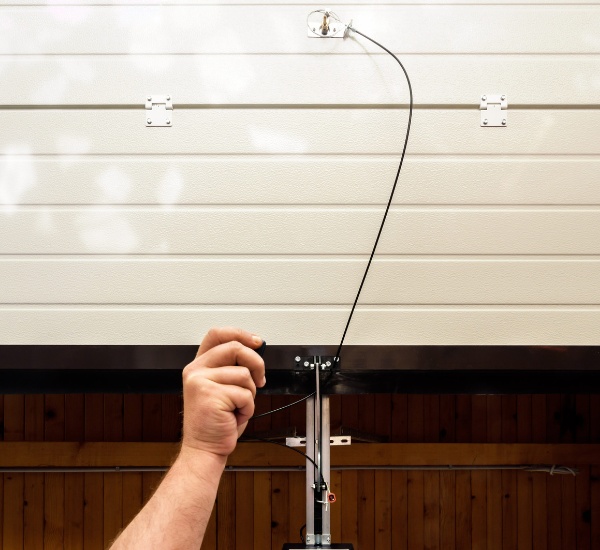
Common Garage Door Track Problems
Three failures account for most of the track work we do in Los Angeles:
- Bent sections. A tap from a car bumper, a basketball rebound, or a heavy object leaning on the track puts a kink in the rail. Even a small bend narrows the channel; rollers then ride up and over the lip instead of through it. Bends cluster at two spots: mid-height on the vertical run, and at the curve where vertical meets horizontal.
- Misalignment and uneven gaps. The vertical tracks must be plumb, parallel, and set at the exact distance the door's rollers require. When one side shifts — a quarter inch is plenty — the gaps between door and rail go uneven, the door travels crooked, and the side with the tighter gap starts binding.
- Loose mounting hardware. Each track hangs from lag bolts into the door jamb and angle brackets to the ceiling. Vibration from door cycles plus thermal expansion backs these fasteners out a little at a time. A track with loose anchors flexes under load, which reads to the door as misalignment and to you as popping sounds on every cycle.
Salt air near the coast adds a fourth factor for our western customers: corrosion at the bracket and bolt interfaces that accelerates loosening from Santa Monica to Playa del Rey.
Symptoms of Track Trouble
Tracks fail gradually, and they telegraph the failure early. Any of these deserves a look before the door ends up off its rails:
- Binding at one spot. The door hesitates or shudders at the same point every cycle — usually a bend or a pinched gap right there.
- Scraping and popping sounds. Metal-on-metal noise means rollers are riding the track wall, not rolling inside the channel. Our guide to fixing a noisy garage door helps you tell track noise apart from dry rollers and loose hardware.
- Crooked travel. Watch the door move. If it leans — one side leading, the other lagging — the tracks are out of alignment with each other.
- Visible gap changes. Stand inside and sight down each vertical track. The gap between rail and door edge should be even from top to bottom on both sides.
- Daylight at the sides when closed. A door pulled crooked by misaligned tracks sits unevenly against the stops, leaving a gap that lets in dust, leaves, and Valley heat.
Realignment or Section Replacement?
Not every bent track needs new steel, and not every crooked door just needs a shove. Here is the decision framework we use on site:
| Finding | The Fix | Why |
|---|---|---|
| Track out of plumb or square, steel intact | Realignment — re-square, re-plumb, re-anchor | Hardware and geometry fix it; no parts needed |
| Spread track lip (mouth opened up) | Straightened with track tooling | Channel returns to spec; rollers seat again |
| Single sharp kink or crease | Replace that section | Creased steel re-bends under load; hammering weakens it |
| Corroded or thinning rail | Replace the affected run | Corrosion has removed structural margin |
Replacement sections are matched to your track's gauge and profile — mixing track types on one door creates exactly the kind of geometry problem we are there to eliminate.
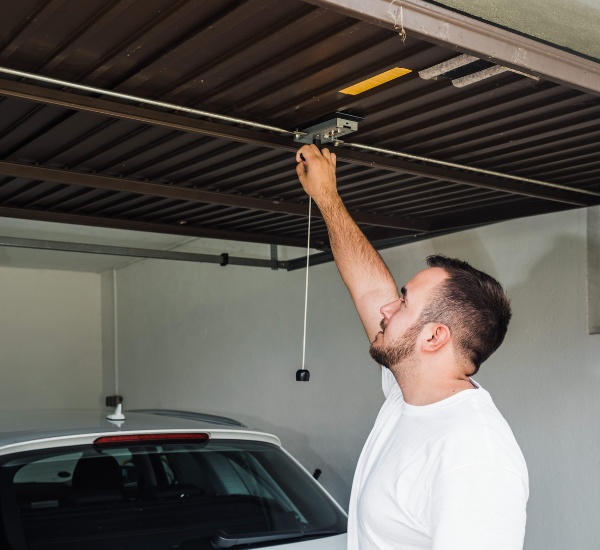
Why Tracks and Rollers Get Repaired Together
Track and roller wear is a feedback loop. A flat-spotted or chipped roller drags against the channel wall, widening the track lip and throwing the geometry off. A bent or misaligned track chews rollers in return, flat-spotting them on one side. Repair either part alone and the survivor keeps damaging the new one.
So on track jobs we always assess the rollers, and in practice most track repairs end with a fresh set. It costs a modest amount more on a visit where the door is already coming down off its hardware, and it converts a partial fix into a complete one. New nylon rollers also run quieter — if your garage shares a wall with a bedroom, that alone is worth it.
How Much Does Garage Door Track Repair Cost in Los Angeles?
Track work generally lands inside our typical repair range of $150 to $500:
| Service | Typical Cost Range | Notes |
|---|---|---|
| Realignment and re-anchoring | Typically $150–$250 | Squaring, plumbing, and fresh mounting hardware |
| Bent section straightening | Typically $150–$300 | On-site tooling; only when steel is undamaged |
| Track section replacement | Typically $200–$450 | Matched-gauge rail; per-section pricing |
| Roller set added during track work | Typically $100–$250 | Protects the repair; standard pairing on most jobs |
Planning ranges, not quotes — door size, brand, and what the inspection finds move the number, and you see it in writing before we start. The citywide comparison across all repair types is in our Los Angeles garage door repair cost guide.
Keeping Your Tracks Healthy
Track problems are cheaper to prevent than to fix. Three habits do most of the work. Keep the track path clear — nothing stored against the rails, no brooms hooked on the horizontal runs. Keep the channels clean — wipe dust and grit out of the rail interior a few times a year so rollers ride on smooth steel, not sandpaper. And schedule a tune-up: our garage door maintenance service includes track inspection, hardware tightening, and lubrication, which catches loose bolts and early bends long before they become repair calls. The same habits show up in the homeowner maintenance pointers published by DASMA, the Door & Access Systems Manufacturers Association.
"Very professional, would recommend his service" — Chong Li, Google Review
Frequently Asked Questions About Track Repair
What Los Angeles homeowners ask when the door stops traveling true.
Most track repairs fall inside our typical repair range of $150 to $500. Realignment and re-anchoring sit at the low end, while straightening or replacing bent sections costs more. Roller replacement is often added since worn rollers and damaged tracks wear each other down. You get a free written estimate before we start.
Minor bends and spread track lips can usually be straightened on site with track tooling. A section that is creased, cracked, or bent at a sharp angle should be replaced with matching-gauge track instead, because hammered-out metal weakens and re-bends under load. We tell you which situation you have before touching anything.
Watch the door travel. Binding or sticking at the same spot each cycle, scraping or popping sounds, rollers that visibly ride against one track wall, and a door that leans as it moves all point to misalignment. You can also sight along the vertical track: the gap between rail and door side should look even top to bottom.
Vibration from thousands of door cycles slowly backs lag bolts out of the jamb, and seasonal expansion and contraction from hot summers and cool nights works them further. Heavier doors and worn rollers amplify the shaking. We re-anchor tracks with properly sized fasteners and check them during tune-ups.
Usually yes. Worn rollers chew up tracks, and a repaired track with old flat-spotted rollers simply fails again. Since the door already comes off its track during the work, adding a roller set is a small incremental cost that protects the whole repair.
Related Services and Guides
The three pages track-repair customers open next.