
Garage Door Safety Sensor Repair in Los Angeles
When the door reverses for no visible reason or refuses to close at all, the photo-eye sensors are usually the culprit. Here is how the beams work, the fix you can try yourself, when garage door sensor repair needs a technician, and what it costs.
Garage door sensor repair in Los Angeles typically runs $100–$300. EM Garage Doors realigns photo eyes, cleans lenses, repairs sensor wiring, and replaces failed units so the door closes fully again. If the door reverses mid-close or the opener light blinks, call (818) 919-0785 for a free estimate.
The scenario is familiar across Los Angeles: you press the button, the door starts down, travels a foot, and heads right back up. Nothing is on the floor. You press again. Same dance. The problem is almost never ghosts — it is the two small plastic boxes mounted near the floor on either side of the opening, and they have stopped talking to each other.
Those boxes are photo-eye sensors, the single most common reason a garage door will not close, and one of the most common repairs we make. They fail in LA for predictable reasons: dust and debris baked onto the lenses by Valley heat, spider webs strung across the beam path, brackets knocked out of alignment by a bump from a trash can or a curious kid, and wiring chewed or corroded over a decade or two of service. If your door has broader trouble — no response at all, dead remote, grinding sounds — start with our guide to why a garage door will not open or close; this page stays focused on the sensors.
Based in Reseda? See our dedicated garage door sensor repair in Reseda, CA page.
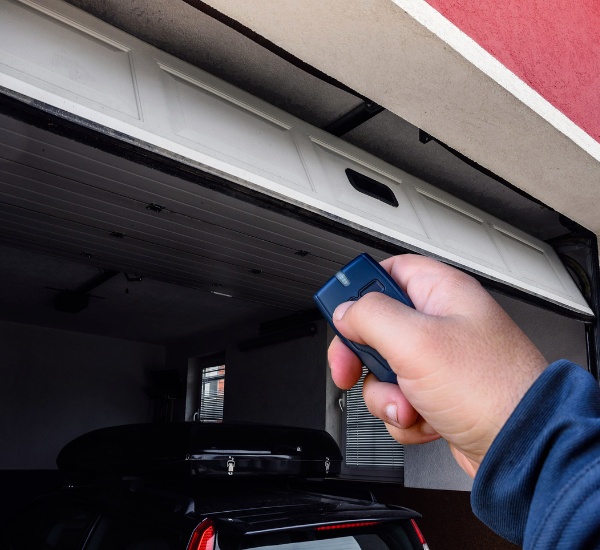
How Photo-Eye Safety Sensors Work
One sensor — the sender — fires an invisible infrared beam across the door opening, four to six inches above the floor. The other — the receiver — catches it. The opener watches that handshake. Beam intact: the door is allowed to close. Beam broken: the opener either refuses to move the door down at all, or reverses it immediately and often flashes the wall-unit light to tell you why.
The whole arrangement exists to stop the door from closing on a child, a pet, or a package. It is deliberately sensitive, which is also why it is easily fooled by dirt, glare, and misalignment. The sensors must point at each other with almost no tolerance: an angle off by just a few degrees can drop the beam. Most units signal their status with small LED indicators — steady means happy, blinking means the beam (or the wiring behind it) is compromised.
Because the sensors are wired back to the opener motor unit, a fault can live anywhere along that path: the photo eyes themselves, the low-voltage wires stapled along the rail and wall, or the receiver logic inside the opener. Diagnosing which one is where a pro earns the visit.
Symptoms of Failing Safety Sensors
Sensor trouble announces itself in a handful of recognizable patterns:
- The door reverses mid-close. It travels down a few inches to a foot, then returns open. Classic broken beam.
- The door will not close at all. You press the wall button; the motor clicks or does nothing downward. The opener is holding the door open because the beam reads as blocked.
- The opener light or sensor LED blinks. Manufacturers use blink codes — typically ten flashes — to flag sensor circuit faults.
- The problem comes and goes. Works at night, fails in the afternoon sun; works after rain, fails in dry dusty weeks. Direct sunlight or lens grime is the usual suspect.
- The door only closes while you hold the wall button. Holding the button overrides the sensors on most openers — a built-in fallback that tells you the sensor circuit is the problem. Use it only to close the door while the path is visibly clear, then get the sensors fixed.
The DIY Fix: Align and Clean the Photo Eyes
Before paying anyone — including us — try this five-minute routine. It resolves a large share of sensor complaints:
- Clear the path. Sweep out leaves, pull webs off the sensor faces, and move anything even close to the beam line, including long grass and a bulging garage door seal.
- Clean both lenses. Wipe each photo eye with a soft dry cloth. In dusty Valley neighborhoods a film builds up fast enough to scatter the beam.
- Check the lights. Look at the indicator LEDs. One steady and one blinking almost always means misalignment.
- Re-aim them. Loosen the wing nut on the blinking unit, rotate it until it points squarely at its partner and the light goes steady, then snug the nut. A string stretched between the two sensors makes a straight-edge if the brackets look off.
- Test a full cycle. Close the door. If it completes the cycle and reverses when you wave a broom through the beam, you are done.
Did that solve it? Great — you just saved a service call. If the lights blink on with no obstruction, flicker when you wiggle the wires, or the door still reverses, the fault is deeper than aim, and that is our department.
When Sensor Repair Needs a Pro
Three failures sit beyond the wing nut:
- Wiring damage. The low-voltage wires from opener to sensor corrode, get pinched by the track, or fall to rodent damage. We trace the circuit, replace the damaged run, and route it so it stays protected.
- Failed photo eyes. Sensors die from age, heat, and water intrusion. We replace the pair with units matched to your opener brand — LiftMaster, Chamberlain, Genie, Craftsman, and Linear — and align them properly the first time.
- Receiver or logic-board faults. Sometimes both sensors are fine and the opener brain is misreading them. That diagnosis takes test equipment and, if confirmed, a board-level repair covered in detail on our garage door opener repair page.
How Much Does Garage Door Sensor Repair Cost in Los Angeles?
Sensor work is among the friendlier repairs on a garage door. Most jobs land inside the typical opener repair range of $100 to $300:
| Service | Typical Cost Range | Notes |
|---|---|---|
| Photo-eye realignment and lens service | Typically $100–$150 | Lowest-cost fix; includes bracket and beam-path check |
| Sensor wiring repair | Typically $100–$250 | Depends on the damaged wire run and access |
| Sensor pair replacement | Typically $150–$300 | Matched to opener brand, installed, aligned, and cycle-tested |
Treat these as planning ranges, not quotes. We diagnose free and give you a written price before touching anything — the same policy behind every job on our Los Angeles garage door repair list. For how sensor work compares with springs, panels, and openers citywide, see the repair cost guide.
Why Working Sensors Matter
A door that will not close is annoying. A door that closes on whatever is underneath it is dangerous. The sensors are the last line of defense for kids darting out, dogs sleeping in the doorway, and deliveries left in the wrong spot. Every bypass — taping the eyes, holding the wall button, unplugging the sensor wires — removes that defense to dodge a repair that often costs less than a dinner out.
Working entrapment protection has also been required on openers sold in the United States since 1993, under federal safety rules overseen by the U.S. Consumer Product Safety Commission. If your opener predates photo eyes entirely, the safest upgrade is a modern unit; customers in that position tend to end up happiest, like this one:
"Had a great experience with Eddie. He responded quickly. He made himself available quickly and successfully completed our project. He seems nice, genuine and competitively priced. We are using him again very soon." — Michelle Moore, Google Review
Frequently Asked Questions About Sensor Repair
What Los Angeles homeowners ask when the door will not close.
In most cases the safety sensors cannot see each other across the opening, so the opener reverses or the door stops and returns up. Misalignment, dirty lenses, a blocked beam path, damaged wiring, or a failed photo eye all cause it. The blinking indicator light on the sensor pinpoints which side has the problem.
Most sensor repairs fall inside the typical opener repair range of $100 to $300. Realignment and lens cleaning sit at the low end. Wiring repair and replacement photo eyes land higher. We diagnose free of charge and hand you a written quote before any work starts.
Yes, if the problem is simple misalignment. With the door closed, loosen the wing nuts, aim each photo eye at the other until both indicator lights glow steady, and retighten. Wipe both lenses clean first. If the lights still blink or the door still reverses, the fault is electrical and needs a technician.
A flashing light on one or both photo eyes means that unit is not receiving a clean beam. The receiving sensor usually glows green when the path is clear and amber or dark when it is not. Blinking points to misalignment, an obstruction, dirty lenses, or a wiring fault on that side.
Yes. Since 1993, federal standards have required garage door openers sold in the United States to include an external entrapment protection system, and photo-eye sensors are the standard implementation. A door that closes without working sensors is unsafe and fails safety inspections on home sales and rental inspections.
Related Services and Guides
The three pages sensor-repair customers open next.