
What Does an Automatic Gate Cost in Los Angeles?
Typical installed price ranges for swing, sliding, and cantilever gates in LA, the site conditions that move the number, and the cheaper retrofit path for an existing manual gate. For homeowners budgeting a driveway gate project.
Automatic gate cost in Los Angeles typically runs $2,000–$8,000+ installed for driveway gates. Swing gates usually cost less than sliding gates, and the opener motor adds roughly $500–$1,500. Hillside lots and long driveways push the number up. EM Garage gives free on-site quotes, Monday through Friday.
An automatic gate does two jobs at once: it secures the driveway and it frames the property. In Los Angeles, with hillside lots, long driveways, and delivery traffic that never stops, demand for them keeps climbing — and so does confusion about what one should cost. Automatic gate cost in Los Angeles depends more on your driveway than on the gate catalog: the same 14-foot gate can swing open on flat ground in Reseda for one price and need a sliding track on a slope in Woodland Hills for twice as much.
Below are the typical ranges we quote from, the factors that move them, and the cheaper path most homeowners overlook — automating the manual gate that is already standing.
Automatic Gate Cost in Los Angeles by Gate Type
These ranges cover the gate fabrication, the opener system, and professional installation for a typical residential driveway. Treat them as planning numbers — final pricing comes after an on-site look at the driveway, posts, and power supply. Not sure whether your driveway calls for swing, sliding, or cantilever in the first place? Our driveway gate types guide for LA walks through the trade-offs before you price motors.
| Gate type | Typical installed range | Best suited for |
|---|---|---|
| Single swing gate | $2,000–$4,500 | Narrow driveways, flat ground, clear swing arc |
| Dual swing gate | $3,500–$7,000 | Wide driveways; two leaves, two operators |
| Sliding gate | $3,500–$8,000+ | Slopes, tight side clearance, long driveways |
| Cantilever gate | $4,000–$10,000+ | No ground track; snow-free but uneven surfaces, heavy use |
| Opener motor (added) | $500–$1,500 | HP sized to leaf weight and duty cycle |
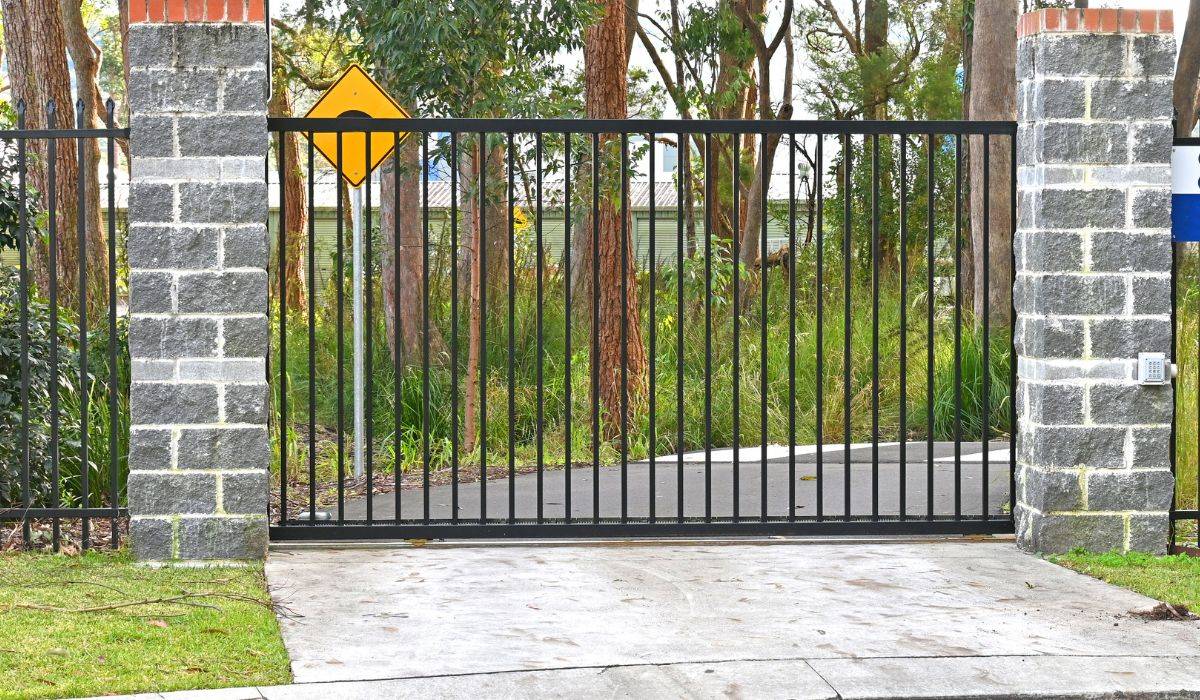
The swing-versus-slide question answers itself at your property line. Swing gates cost less because their hardware is simple — hinges and an arm or underground operator per leaf — but they need flat, unobstructed room to arc open. Sliding gates cost more for the same width because of the track, rollers, and heavier motor, yet they are often the only geometry that works on graded or space-starved lots. If a gate has to climb a slope, sliding is usually the answer; a swinging gate dragging uphill destroys its own operator.
Material moves the fabrication line more than most homeowners expect. Open-work wrought iron and steel tube designs sit at the accessible end because the frame is light and the infill is air. Solid-privacy gates — sheeted aluminum, wood slat, or composite — weigh more, catch wind like a sail, and need sturdier posts and a stronger motor, all of which show up in the price. Between them sit the mid-weight options: aluminum picket, horizontal slat with gaps, and mixed glass-and-steel designs that read modern without the full privacy premium.
Access control is where budgets quietly balloon. A single wireless keypad is the economical entry point. Add a vehicle detector loop so the gate opens automatically when you pull in, an intercom or camera for visitors, a card reader for household staff, or smartphone control for the whole family, and each device adds equipment plus labor. Our advice: start with the entry setup you will actually use daily, and leave conduit capacity for additions later — retrofitting wire after the posts are closed up costs far more than planning for it. Businesses weighing gated access for a yard or storefront should also look at our commercial garage door and gate services.
What Drives the Price Up or Down
Five factors do most of the moving. Width and material: longer leaves and solid-privacy infill weigh more and cost more than a short open-work iron gate. Motor size: heavier gates and high daily cycles need stronger operators, which shows up in the equipment line. Slope: grading, custom geometry, or a sliding conversion add labor and hardware. Access control: every keypad, intercom, card reader, loop detector, and extra remote adds to the scope — a basic keypad setup keeps this line small. And permits: requirements vary by city and sometimes by HOA, so check local building rules before work starts; taller driveway gates often need one.
Power matters too. If no outlet sits near the gate, trenching a new circuit to the posts adds cost — sometimes the deciding factor between gate styles.
LA-Specific Costs: Hillside Lots and Coastal Air
Los Angeles adds two line items other cities do not. The first is hillside engineering. Properties in the hills and canyon edges often have sloped entries, tight turns, and long driveways — conditions that push projects toward sliding or cantilever gates and heavier motors. The second is coastal corrosion. Near Santa Monica and the beach cities, salt air eats standard steel hardware, so powder-coated aluminum and stainless components last far longer and are worth their premium on any gate within a few miles of the ocean.
Automating an Existing Manual Gate
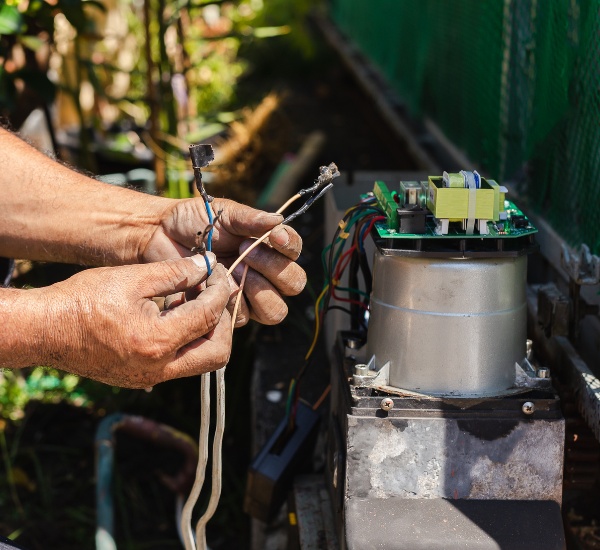
Here is the option that saves the most money: if a sturdy manual gate already spans your driveway, adding an operator to it often costs a fraction of a full replacement. The retrofit checklist is short. The gate must swing or slide smoothly by hand, the posts or frame must be solid enough to carry the motor, and the hinges need to be in good condition — a binding gate kills operators. Our gate repair service handles the prep work: hinge and roller replacement, track realignment, and the electrical checks before a motor ever gets bolted on. In many cases we repair and automate in the same visit.
"Edi was super courteous, respectful and honest. He resolved the issue with our electronic gate and was very reasonable with the cost. I will definitely be referring his company to everyone I know that needs repair or a new electronic gate." — billy r, Google Review
How to Get an Exact Number
Ranges get you budgeting; a site visit gets you a number. We measure the opening, check the slope and power, test the existing gate if there is one, and hand you a written quote before any work begins. A complete quote should itemize the gate fabrication, the operator and its rating, access-control devices, electrical work, and installation labor — anything vague in those lines is where surprise charges live later.
Two questions are worth asking any installer before you sign. First, what duty cycle is the motor rated for? A gate that cycles a dozen times a day needs a heavier operator than one used twice. Second, what safety features are included — photo eyes and auto-reverse? Gates are heavy moving machinery at a property entrance, and the safety devices are not the place to trim the budget.
If your project is a repair rather than a new install, our gate repair cost guide covers what typical fixes run. To schedule a free on-site quote, call (818) 919-0785 or send us the details through the contact page.
Automatic Gate Cost FAQ
Common budgeting questions from LA gate projects.
Most LA homeowners spend between $2,000 and $8,000 or more for an installed automatic gate, including the motor. Single swing gates sit at the low end, sliding and cantilever gates at the high end. A free on-site quote pins down your exact number.
Swing gates usually cost less because they need no long track and use simpler hardware. Sliding gates make sense on sloped or tight driveways where a swing arc will not fit, and they often cost more to install for the same width.
Often, yes. If the gate is sturdy, swings or slides smoothly, and has sound hinges, adding a motor and access control typically costs far less than a new gate. We inspect the posts and frame first to confirm they can carry the operator.
Requirements vary by city and sometimes by HOA, so check local rules before work starts. Driveway gates over certain heights often need a permit. We can walk you through what to ask your local building department during the free quote.
The gate structure itself — posts, frame, and infill — routinely lasts decades with paint and hinge care. Operators and access-control electronics are the wear items: expect roughly 10 to 15 years from a quality motor, less in coastal salt air. Twice-yearly service visits push every part toward the high end of its range.
Almost always, yes. Motor replacement typically runs $500 to $1,500 installed — a fraction of a full new gate at $2,000 to $8,000-plus. As long as the posts are plumb and the frame is sound, repairing or re-motoring the gate you have is usually the smarter spend. We inspect and quote both options on site.
Keep Reading
Related services and pricing guides for your gate project.