
Garage Door & Gate Repair in Woodland Hills, CA
Woodland Hills posts some of the hottest readings in Los Angeles every summer, and month-long stretches above 100 degrees age door hardware fast. This page explains what heat does to springs and openers, why insulation earns its keep here, and what repairs typically cost.
Garage door repair in Woodland Hills comes down to heat. Summer runs above 100°F thin lubricants, dry out nylon rollers, and age spring steel faster than anywhere else in Los Angeles. We repair heat-stressed springs ($150–$350 typical), sluggish openers, and brittle seals with weekday appointments. Free estimate: call (818) 919-0785.
The Hottest Corner of the Valley Is Hard on Doors
Meteorologists keep ranking Woodland Hills among the warmest spots in the entire city, and residents plan their lives around it: morning walks before eight, kids' sports postponed until dusk, air conditioners humming from June through October. Your garage door absorbs the same weather twice over. The panel bakes in direct sun from outside, while an enclosed garage traps radiant heat inside like a low oven, pushing interior temperatures well past whatever the porch thermometer claims — the same pattern we see one neighborhood over in Tarzana.
That combination attacks three materials predictably. Spring steel work-hardens as it expands and contracts through daily temperature swings on top of every open-close cycle, spending its fatigue budget years early. Nylon roller wheels dry out, chalk up, and start cracking around their bearings. And the lubricants that keep everything sliding simply evaporate or gum up faster at these temperatures than any product label admits. Heavy spring work climbs on our schedule most reliably between July and September — replacements handled by our spring team run $150–$350 for standard doors.
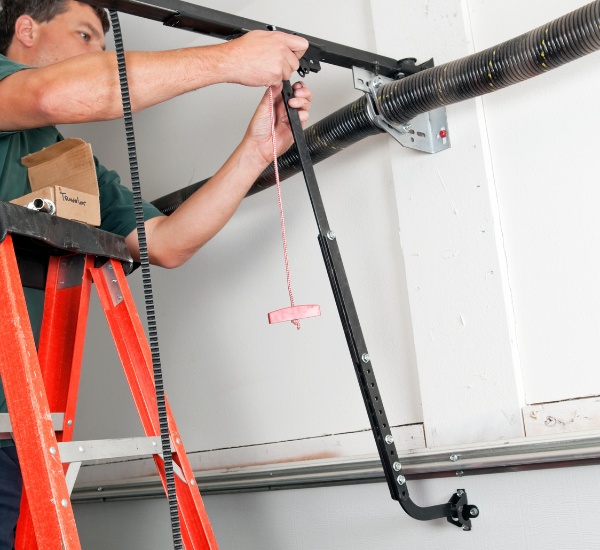
West-facing driveways get hit hardest
A door facing the afternoon sun cycles hot metal against hot metal daily. Short spring life shows up fastest on west exposures, so if your driveway points that way, lubrication intervals matter even more than neighbors with shaded north-facing doors realize.
Signs Heat Is Winning Against Your Door
Your ears hear the failure before your eyes confirm it. A sharp squeal while the door rises usually means bearings or rollers running dry — lubricant cooked away sometime in the past month of triple-digit afternoons. Ignore the squeal long enough and nylon wheels crack outright, sending grit into the tracks.
Openers confess differently. A unit that always lifted briskly but now pauses, strains, or stops mid-travel may simply be fighting swollen sections binding in expanded frames — though sometimes the real culprit is thermal protection cutting out as the motor overheats inside an attic-hot ceiling space. Remotes fail comically often too: coin-cell batteries die young when they live in cars parked in 130-degree interiors, so half the "broken remote" calls we get end with a fresh CR2032 and an apology nobody needed to make.
Catching wear early keeps the fix small. A seal replaced in June costs far less than warped panels discovered in October, and either job starts with the same free on-site diagnosis that begins every call handled by our repair crew. Neighbors just down Ventura Boulevard face milder versions of the same sun exposure, which you can compare on the Encino service page.
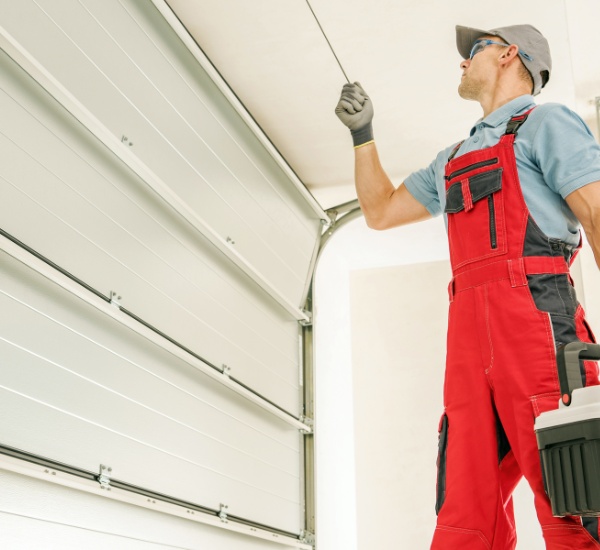
Insulation Pays Off Here More Than Anywhere Else in LA
On service pages for cooler neighborhoods we describe insulation as situational. In Woodland Hills we make the case without hedging. Most local homes were built with attached garages sharing a wall, and frequently a bedroom or hallway, with the door itself. An uninsulated two-car steel door behaves like a six-by-eight-foot sheet-metal oven window in that shared wall, radiating afternoon heat into the house long after sundown.
Adding insulation changes the physics. Polyurethane or polystyrene-backed panels slow the transfer dramatically, which lightens the load on the air conditioner trying to cool rooms beside the garage. The door itself benefits: insulated panels resist the daily flex-cycle that fatigues cheap steel, opener electronics live longer above a less volatile temperature swing, and anything you store in the garage — paint, wine, camping gear, or the car's interior — takes less punishment. Numbers vary by door construction, so our free walk-through includes measured options with clearly-hedged typical LA pricing rather than guessed figures. Full process details sit on the insulation service page, and pairing the upgrade with scheduled visits through our maintenance program covers the rest.
How Much Does Garage Door Repair Cost in Woodland Hills?
Heat changes hardware lifespans, not price anchors. General repairs stay in the $150–$500 band across Los Angeles, spring replacement runs $150–$350 for most residential doors, and opener repairs hold between $100 and $300 unless age argues for a new unit — a judgment we put in writing with reasoning, never pressure. Every estimate happens on site, before work begins, at no charge.
New insulated doors carry the widest cost spread since prices track material, window layout, and R-value honestly rather than smoothly. We present those as typical LA ranges during the visit and let final quotes follow actual product selections. Homeowners comparing across communities should know none of this varies by ZIP code; what varies locally is only how soon the hardware asks for help.
"When I realized my old garage door was beyond repair, I called EM Garage Doors and Gate Service and they had someone out the next morning to assess and quote—no runaround, just a clear estimate at a fair price… The whole replacement was done in just a few hours." — Armin Arasheben, Google Review
Emergency-Type Repairs We Run in Woodland Hills
In Woodland Hills — regularly the hottest spot in Los Angeles — the first heat wave of the year works like a starting gun. Springs that survived a mild spring start snapping in batches; lubricant cooked off the tracks makes rollers chatter and climb; insulated doors, heavy by design, punish tired cables. Most of our urgent calls here come between June and September, and most start with a bang from the garage that the whole street hears.
The list: off-track door repair, spring replacement in heat-appropriate cycle ratings, safety sensor repair — heat-skewed brackets are a real thing here — and cable repair matched to insulated-door weight. If your door survived last summer but started sagging this year, that is the warning, not the failure; call before it becomes one. Weekdays, (818) 919-0785; the truck rolls west from Reseda, with Calabasas and Tarzana on the same loop.
Woodland Hills Garage Door FAQ
What local homeowners ask us most, answered plainly.
Yes. Springs are hardened steel wound under enormous tension, and daily expansion and contraction from extreme heat fatigues the metal years ahead of schedule. Heat also thins the lubricant meant to reduce friction between coils. We cannot promise an exact lifespan because cycle counts vary by household, but the pattern we see locally is consistent: hotter addresses replace springs sooner.
Spring, ideally in April or May before the first sustained triple-digit stretch. A pre-summer visit lets us refresh lubricant, test balance under mild conditions, and swap tired parts while the garage still tolerates a technician working inside it comfortably. Booking after summer works too — fall catches whatever the heat weakened.
In this neighborhood, more than anywhere else in Los Angeles. Most local homes have attached garages sharing at least one wall with living space, and an uninsulated steel door becomes a radiator pointed inward all afternoon. Insulation moderates that transfer, protects stored items and opener electronics, and quiets the door noticeably.
Twice a year is our honest recommendation for this ZIP code — roughly once in late spring and again at summer's end — rather than the single annual pass we suggest elsewhere. Triple-digit weeks cook standard lubricant off rollers, hinges, and bearings within a few months, so the second application matters here more than homeowners expect.
Keep Exploring
Where to go next on the site.