
Vintage Garage Door Repair & Restoration in Glendale
Glendale's housing stock spans a century, and its garage doors show every decade of it — craftsman originals, Spanish revival beauties, and mid-century steel on openings that were never standard. This page explains how we repair, match, and when we restore versus replace.
Glendale garage door repair often means vintage work: non-standard openings, craftsman and Spanish revival originals, and restore-or-replace decisions. Typical repairs run $150–$500, springs $150–$350, opener repair $100–$300. Free estimates and honest restoration advice, Monday through Friday.
A Century of Housing, a Century of Doors
Few cities in the county pack as much architectural history per block as Glendale. The 1920s bungalows and Spanish revival houses of the flatlands roll uphill into 1930s and 40s cottages, then 1950s and 60s ranch tracts along the ridgelines — each era installing garage doors built to that decade's ideas, in openings cut before dimension standards settled into the modern eight-by-seven default. A single street can carry swing-out wood carriage doors, one-piece tilt-ups, and early sectional steel, all within three houses of each other.
For a repair company, that variety is the job. Stock parts fit stock doors, and Glendale simply has less of either. Work here leans on measurement, sourcing, and judgment: matching a section profile that went out of production decades ago, fitting a modern opener to a hand-built wood door without abusing it, and telling a homeowner honestly when the craftsman original deserves restoration instead of a trip to a landfill.
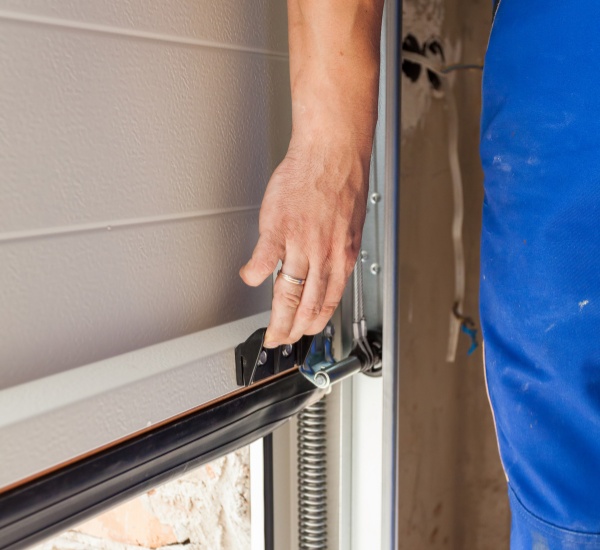
One damaged section should not doom a door
We repair by section wherever the rest of the door is sound: identify the profile, source or fabricate the match, finish it to blend, and re-balance the door afterward. It is slower work than swapping a whole door, and on a vintage Glendale house it is usually the right work.
When the Opening Isn't a Standard Size
Pre-war builders framed garages to the car they owned, the lot they had, and the lumber that was cheap that year — not to a catalog. So Glendale openings run narrow, short, tall, and occasionally all three, with brick or stucco trim that nobody wants to cut into to make a modern door fit. The good news: odd sizes are a solved problem, just not an off-the-shelf one.
Two paths handle it. Doors can be ordered oversized and trimmed to fit, which works when the opening is close to a standard dimension and the trim allows it. Or the door can be custom-built to the measured opening, which is the honest answer for genuinely odd framing and for homeowners keeping a period look intact. Either way, the springs get sized to the actual door weight, never guessed — an odd-size door is usually an odd-weight door too. Custom work prices above stock sizes, and we quote it only after measuring. The replacement process overall is covered on our installation page.
Restore or Replace? A Practical Test
The question earns a real answer, not a reflex. Restoration usually wins when three things hold: the framing is square and sound, the wood sections are dry and rot-free (or close to it), and the door's style genuinely belongs to the house — a 1927 Spanish revival with its original wood door loses something irreplaceable when a vinyl sectional goes in. In those cases, restoring hardware, replacing springs and rollers, and refinishing surfaces typically costs a fraction of a custom replacement and keeps the facade authentic.
Replacement wins when rot has reached structure, when prior repairs have already replaced most of the door with mismatched material, or when the existing door is a poorly fitted later addition the house never asked for. We apply the test on site, show you what we see, and quote both paths when the call is close. What we refuse to do is sell a replacement by default because it is easier to invoice — the honest diagnosis is the product. Some of the clearest feedback on our Google profile comes from homeowners who expected a sales pitch and got a straight answer instead.
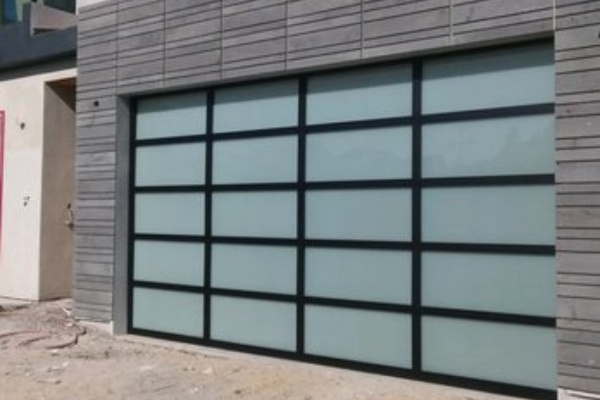
Matching Panels and Period Details
Panel matching is part sourcing and part craft. We start by identifying the manufacturer and section profile — much of Glendale's mid-century stock traces to makers whose profiles are still produced or closely echoed today. When the exact profile is gone, we source the nearest match and finish it to blend with decades of weathering on the surrounding sections, and we tell you plainly how close the blend will come before anything is ordered. Perfect matching against forty years of sun is honest work, not guaranteed work.
Hardware follows the same logic. Hinge and pull styles that read as period details can usually be matched or reproduced; modern lift hardware gets chosen to do its job invisibly so it does not argue with the door above it. Openers deserve particular care on vintage wood doors — a belt-drive unit properly sized and adjusted will move a restored carriage door for decades, while a crude chain unit on full force will rack the joints apart in a few years. The whole repair scope starts on our garage door repair page.
Vintage Doors, Modern Safety
An eighty-year-old door can behave like a new one where it counts, and it should. Photo-eye sensors mount at the floor on either side of any vintage opening, wired to the opener so the door reversals modern safety expects actually happen. Force settings get tuned to the door's real weight rather than cranked up to muscle past tired springs — the lazy fix that racks old joinery apart. And when a wood carriage door meets a modern opener, the belt-drive choice is not about luxury; it is the gentlest motion available for joints held together by 1920s glue and good intentions. None of it changes how the door looks from the street. All of it changes what happens when a child or a car bumper gets under a moving door, which is the part that matters.
"Very professional, would recommend his service" — Chong Li, Google Review (August 2026)
What Glendale Door Work Costs
Standard repairs — springs, cables, rollers, track adjustments, opener service — follow the same anchors everywhere we work: typically $150–$500 for general repairs, $150–$350 for spring replacement, $100–$300 for opener repair. Vintage-specific work prices differently: panel sourcing, fabrication, and refinishing are quoted after inspection because material condition and profile availability swing the number. Custom-built doors for non-standard openings sit above stock pricing, in line with LA market rates for custom work, and you see the written quote before anything is ordered or built.
For neighboring coverage, our Burbank page covers the studio-city stock to the south, and the Pasadena page handles the other great vintage-housing city to the east. The whole coverage map sits one click away on our service areas hub.
Emergency-Type Repairs We Run in Glendale
Glendale's oldest garages hold hardware nobody stocks anymore, which turns a sudden failure into a puzzle most companies won't touch. A 1930s carriage door still turning its original cable drums, a spring with no modern cycle rating stamped on it, sensors retrofitted onto an opening that never had any — when one part of a system like that lets go, the whole door stops. The good news: age does not change the failure modes, only the hardware chosen to fix them.
We run off-track door repair with the door's age in mind, spring replacement matched to original door weights, safety sensor repair that brings old openings up to modern auto-reverse behavior, and cable repair on drums we re-line rather than replace when the casting is sound. Call (818) 919-0785 on a weekday — we drive in from the shop in Reseda with vintage-appropriate parts on the truck, and Burbank and Pasadena calls ride the same loop.
Glendale Garage Door FAQ
What owners of older homes ask us most.
Often, yes. While original hardware can be out of production, many older doors use dimensionally standard springs, rollers, and hinges that we can match. For anything truly odd, custom fabrication is an option, and we tell you honestly which path makes financial sense before you spend a dollar.
It can be, when the frame is square, the sections are dry and sound, and the style suits the house. Restoration typically costs a fraction of a custom replacement, though final pricing depends on how much wood and hardware need attention. If rot has spread into the structure, replacement usually wins.
Then we measure it and order accordingly. Older Glendale homes predate today's standard widths, so odd openings are routine for us. A door can be ordered slightly oversized and trimmed, or custom-built to fit. Expect custom work to price above stock sizes, with the final quote after we measure.
In many cases, yes. We identify the manufacturer and section profile where possible, or source a close match and finish it to blend with the aged originals. Perfect matching on decades-old paint is honest work rather than guaranteed work, so we set expectations before ordering.
Keep Exploring
Nearby coverage and related services.