
Garage Door Repair for NoHo's Workshops, Apartments, and Older Homes
North Hollywood runs its garage doors hard — as workshop entrances, as shared apartment parking, as daily workhorses on 1960s and 70s buildings. This page covers what we fix in NoHo, what it typically costs, and how our weekday scheduling fits renters and owners alike.
Garage door repair in North Hollywood covers three common cases here: aging apartment doors, converted workshop garages, and openers that cycle all day. Typical repairs run $150–$500, springs $150–$350, opener repair $100–$300. Free written estimates, Monday through Friday, 8 AM to 6 PM.
NoHo's Two Garage Cultures
North Hollywood holds two neighborhoods under one name. Around Lankershim Boulevard and the transit stops, the arts district hums: converted storefronts, small theaters, recording rooms, and backyard studios where the garage stopped storing cars years ago. East and south of there, the streets quiet into courtyard apartment buildings from the 1960s and 1970s, low-slung complexes with carports and shared garages that house renters rather than owners.
Both cultures use their doors harder than a typical Valley tract home. A workshop garage opens every time a client stops by. An apartment garage cycles through four tenants' schedules before noon. So our NoHo work skews toward durability questions: which opener survives daily use, which seals keep dust out of a workspace, and which aging doors still deserve repair. Renters get fast weekday fixes because most cannot wait through a weekend of blocked parking — our Monday-to-Friday, 8-to-6 schedule exists for exactly that kind of practical pressure.
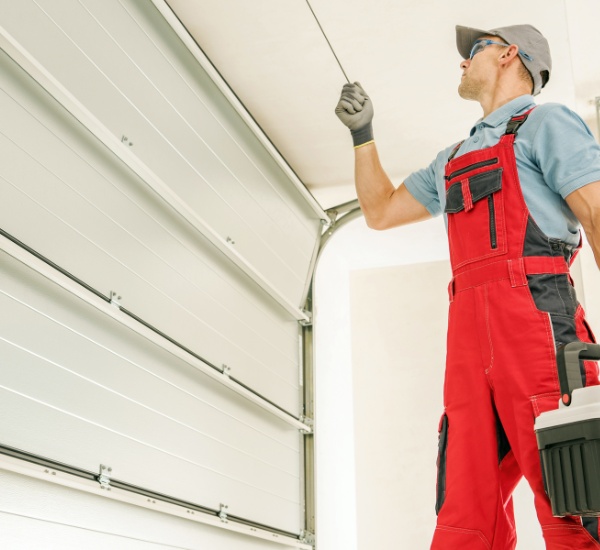
Catch apartment door wear before it strands tenants
A maintenance visit on older stock checks spring tension, cable fray, roller condition, and track alignment — the four failures that strand cars. Building owners who book these annually replace parts on their schedule instead of answering tenant calls on a Monday morning. Each door gets its own notes, so nothing depends on memory.
Apartment Doors From the 1960s and 70s, at the End of the Road
Many courtyard buildings around Magnolia and Burbank boulevards still run their original garage doors — one-piece tilt-ups and early sectionals installed when the buildings went up. Six decades of Valley summers have done what six decades do: springs have sagged through thousands of heat cycles, panels carry the hairline cracks of repeated expansion, and tracks sit a few degrees out of square as the ground underneath has shifted.
Plenty of these doors predate modern safety codes too. No photo eyes, no auto-reversal on the opener, sometimes no reversal protection at all. We assess each door honestly: many just need springs, rollers, and a sensor retrofit to serve another decade — work that lands inside the typical $150–$500 repair range — while a minority have cracked panels or bent tracks that make replacement the smarter spend. In shared garages, we coordinate access with the building contact and keep neighboring bays usable while we work.
Workshop Garages: Sealing Out Dust and Heat
The arts district converted a lot of garages into studios, and those rooms change what a door needs to do. Dust is the first complaint — sanding grit, canyon breeze, and the fine silt that follows windy weeks all find their way through a worn bottom seal and gaps between sections. On a finished canvas or a mixing board, that matters. We replace bottom seals and side weather stripping, close section gaps, and quote the work by the foot after measuring your door, not your neighbor's.
Heat ranks a close second. A west-facing NoHo garage in August is unusable by early afternoon, which cuts studio hours in half. Insulation retrofits — either kit panels fitted into existing sections or a full insulated door — change that math, and we walk through the options and honest payback on our insulation service page. The right choice depends on how many hours a week you actually spend in there.
Opener Upgrades for Doors That Work for a Living
A tract-home door cycles twice a day. A workshop or apartment door can cycle six to ten times daily, and bargain openers simply are not built for it. The failure pattern is predictable: slow travel first, then gear noise, then remotes that only work from ten feet away. Opener repair typically runs $100–$300, and we will say plainly when a tired unit deserves replacement instead of another rebuild — details on the opener repair page.
For upgrades, two features earn their keep in NoHo specifically. Belt drives run quietly, which matters when a studio shares a wall with a neighbor's bedroom. Smartphone control lets a renter or studio owner grant access to a collaborator without handing out remotes that never come back. And on walkable blocks, rolling-code security is not optional — older fixed-code remotes are trivially cloned, so any opener we install or service gets current security standards by default.
Renters: What You Can Approve, and What Needs the Owner
Plenty of NoHo garage problems get reported by tenants and paid for by owners, and the line between those two roles decides how a job runs. A renter can authorize nothing on someone else's building — but you can call us, let us look, and have the written estimate reach the owner before the crew leaves the driveway. Owners, meanwhile, can pre-approve a spending limit so the crew fixes a simple cable or roller issue on the spot instead of booking a second visit around another round of phone tag. It is the single biggest schedule-saver in this neighborhood. If you manage several buildings, keep our estimate format in mind: one page per door, plain language, no jargon a tenant would have to translate back to you.
"Highly Recommended!! The repair guy arrived 1 hour early for a quote but actually replaced the motor before our scheduled appointment." — Evan Bowden, Google Review (October 2026)
What North Hollywood Repairs Typically Cost
General repairs — rollers, cables, track adjustments, sensor retrofits — typically run $150–$500. Torsion spring replacement lands between $150 and $350 for most apartment and workshop doors. Opener repair starts near $100 and rarely passes $300. Full door replacements for apartment buildings vary with material and fire-rating requirements, so those are quoted per building after inspection, with LA-typical ranges discussed on site before you commit to anything.
If you are weighing us against neighboring coverage, our Burbank page handles the media-district stock just over the hill, and the Studio City page covers the hillside custom doors to the west. The full map of neighborhoods sits on our service areas hub.
Emergency-Type Repairs We Run in North Hollywood
NoHo's urgent calls split along its two garage cultures. Apartment owners near Lankershim Boulevard call when a shared door jams and six tenants are circling the block; workshop owners call when a stuck door means the day's work cannot leave the building. Either way the failure is usually one of four: a roller thrown from a worn track, a spring snapped under constant cycling, a sensor pair knocked out of line, or a cable parted mid-lift.
Renters, note: anything beyond a diagnostic needs the owner's approval, so loop them in when you call. The list itself: off-track door repair, spring replacement, safety sensor repair, and cable repair, done weekday mornings or afternoons with the truck coming from Reseda. Call (818) 919-0785 — Burbank and Studio City sit on the same loop, which helps when scheduling is tight.
North Hollywood Garage Door FAQ
What NoHo renters, owners, and building managers ask most.
Usually, yes. Older doors can often be retrofitted with photo-eye sensors and auto-reversal tested openers without replacing the whole door. We check spring tension, cable condition, and track alignment first, because safety upgrades only work on a door that moves correctly. You get a written estimate before we start.
We replace worn bottom seals, side weather stripping, and section gaps that let grit blow in during windy weeks. For workshops we can also discuss insulation retrofits that cut afternoon heat. Sealing work is quoted by the foot after we measure the door, so the estimate reflects your actual gaps, not a guess.
Openers are rated for duty cycles, and a workshop door used six to ten times a day wears a bargain unit quickly. Signs of trouble include slow travel, gear noise, and remotes that only work up close. Opener repair typically runs $100 to $300, and we will tell you when replacement makes more sense.
Yes. Single-bay repairs in shared garages are routine North Hollywood work. We coordinate with the building contact for access, keep the neighboring bays usable while we work, and test the full open-close cycle before we leave. Property owners receive the same free written estimate any homeowner gets.
Keep Exploring
Nearby coverage and related services.