
Garage Door & Gate Repair in Northridge, CA
The 1994 earthquake taught this neighborhood to take shaking seriously, and a garage door is the largest moving part of any home. This page covers what shakers do to doors over time, which safety features matter most for families, and what repairs typically cost.
Garage door repair in Northridge often starts with a question local homeowners know well: did the last shaker knock anything loose? We inspect tracks, sensors, springs, and opener alignment, then repair springs ($150–$350 typical), openers, and family-home safety features. Weekday appointments between 8 AM and 6 PM; estimates free: call (818) 919-0785.
In Northridge, Earthquakes Are Not a Hypothetical
Nobody in Northridge needs a lecture about seismic forces. The January 1994 magnitude 6.7 earthquake remains part of the neighborhood's identity — cracked curbs repaired, chimneys rebuilt, and an entire generation raised with earthquake drills at Balboa Boulevard elementary schools. Ask a longtime resident about their garage and they may still remember neighbors whose doors jammed shut with cars trapped inside.
That history gives our crews a practical mission here. A two-car steel door weighs well over a hundred pounds, rides on parts machined to tight tolerances, and hangs from a frame rigid enough to survive decades of daily cycling. Shake it hard enough and something shifts. Our shop sits just south in Reseda, minutes down Reseda Blvd or Tampa Avenue, which makes scheduling a post-quake lookover through our repair service an easy weekday errand rather than a logistics project.
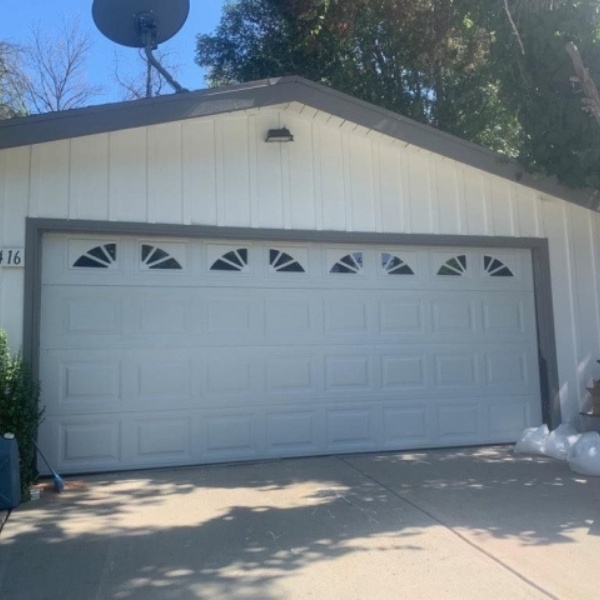
A typical Reseda-to-Northridge check takes minutes, not hours
Sensor realignment, track gap measurement, opener rail inspection, and a balance test cover most shake-related concerns. The whole checklist runs quickly, and it ends with a plain-language report of anything worth fixing now versus later.
After Any Sizable Shaker: A Door Check Is Cheap Insurance
You do not need tools to spot trouble — run one full cycle from the wall button and watch. Four symptoms deserve attention. First, a door that suddenly feels heavier or moves lopsided suggests a spring has lost tension or broken internally, even when no visible gap shows. Second, new daylight peeking between rollers and track means something bent; rollers riding half-out of a warped rail will eventually jump entirely. Third, an opener whose rail pulls misaligned strains against its own geometry, tripping force limits and reversing mid-travel. Fourth, photo-eye sensors that blink or refuse a solid light have been knocked out of alignment, since those units tolerate almost no lateral movement.
One rule overrides everything else after shaking: never grab or push-test a spring to judge its condition by feel. Tensioned springs store enough energy to cause serious injury, and damage hides inside the coils where eyes cannot reach. Pull the manual release cord only with the door fully closed, keep fingers out of section joints, and let a trained technician clamp and inspect properly. An inspection costs nothing up front; an ER trip costs more than any door.
Seismic Wear Shows Up Slowly
Dramatic damage gets the attention, but most Northridge doors accumulate quieter problems across years of small tremors nobody logs. Each minor jolt nudges brackets a fraction of a degree. Track runs drift out of plumb by millimeters that never trip an alarm yet add friction to every cycle. Over seasons, that creeping misalignment eats roller bearings and forces openers toward the top of their force range — which is why a door that worked fine last winter squeals in June.
Weather seals tell the same story. The rubber bottom gasket that keeps dust and spiders out grows brittle faster here than in milder microclimates, and vibration speeds the cracking along its length. Replacing a tired seal costs little and protects the interior finish you actually see. Annual tune-ups through our maintenance program catch drift before it graduates into damage; neighbors comparing notes should also know high-traffic demands differ in denser areas like Van Nuys, where duty cycles rival seismic wear as the primary enemy.
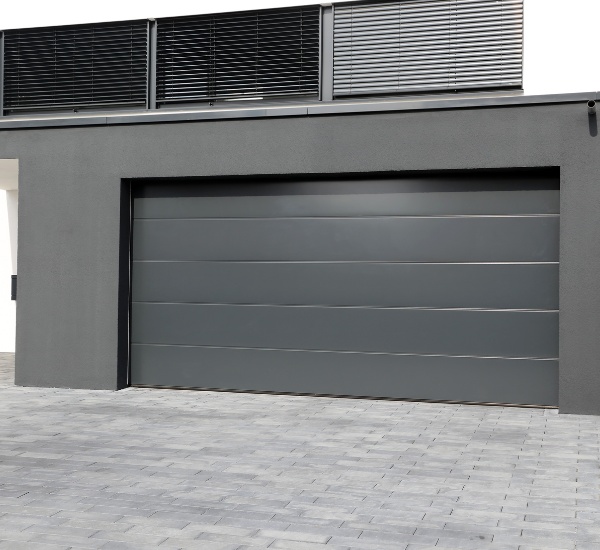
Family-Home Essentials: Safety Features Worth Testing
Northridge fills its driveways with kid bikes, scooters, and stray basketballs, which makes door safety features more than fine print. Photo-eye sensors mounted six inches off the floor beam an invisible line across the doorway; if a tricycle interrupts it, the door must refuse to close. Test monthly by waving a broom through the beam as the door descends — hesitation or instant reversal means healthy sensors, continued descent means call us immediately.
Auto-reverse handles contact cases: anything the door touches should send it rising again within two seconds. Federal standards required force-limiting openers after 1993, so aging pre-1993 units deserve replacement on safety grounds alone. Springs rank second for family risk — a snapped torsion spring under a curious child's button press slams a hundred-plus-pound panel shut without warning. Weight-matched replacements through our spring replacement team restore both the physics and the peace of mind.
"Had a great experience with Eddie. He responded quickly. He made himself available quickly and successfully completed our project. He seems nice, genuine and competitively priced. We are using him again very soon." — Michelle Moore, Google Review
How Much Does Garage Door Repair Cost in Northridge?
The published anchors apply unchanged: general repairs between $150 and $500, torsion spring replacement $150–$350, and opener repairs $100–$300. Spring pricing varies with door weight and whether you replace one side or both, while opener quotes depend on parts versus whole-unit economics — sometimes a gear kit saves an otherwise sound machine, sometimes age argues for new electronics with rolling-code security.
Reinforcement hardware, seals, and sensor swaps fall into small-ticket territory quoted before work starts. Anything larger, such as full door replacement, carries costs that swing widely by material and window layout, so we hedge those numbers honestly as typical LA ranges during the free on-site estimate. You approve every figure in writing first, always. Neighborhood context and coverage details live alongside Reseda's page on our service areas hub.
Emergency-Type Repairs We Run in Northridge
Northridge taught Los Angeles what a quake does to a garage door, and the lesson stuck: after any real shaker, the sudden-failure calls spike. Tracks shift on their mounts, rollers climb out of rails that are suddenly out of plumb, and springs that were fine at breakfast let go by dinner. Even without a seismic trigger, the family-heavy blocks around Balboa Boulevard and the CSUN corridors run doors hard — two working parents, student drivers, bikes left in the wrong place at the wrong second.
The list we keep ready: off-track door repair, spring replacement, safety sensor repair — the photo eyes that protect those bikes — and cable repair on doors that came down crooked. Call (818) 919-0785 on a weekday; the shop sits just south in Reseda, and we schedule Northridge together with Winnetka and Van Nuys on the same loop.
Northridge Garage Door FAQ
Questions we hear from Northridge families, answered directly.
Watch one full cycle from the wall button. Warning signs include a door that feels heavier or lopsided while moving, grinding along the tracks, new gaps between rollers and rail, an opener that strains and reverses for no reason, or sensor lights blinking instead of glowing steady. If any of those appear, stop using the door and call for a professional inspection — never test a possibly damaged spring by hand.
We are careful here: we do not market a certified earthquake-bracing product. What we do offer is an honest assessment during a free on-site inspection — reinforcement struts, track hardware upgrades, and opener rail support all have real places on some doors. We will tell you plainly whether your door is a good candidate or whether the money is better spent on a newer unit.
Spring replacement typically runs $150 to $350 across Los Angeles, and Northridge jobs follow that range. Size, cycle rating, and whether one or both springs need replacing move the final number. We measure the existing springs, quote in writing, and start work only after your approval.
Yes. Auto-reverse testing is part of every maintenance and inspection visit, because it is the single feature most likely to protect a child, a pet, or a bicycle left under a closing door. We place a test object in the path, confirm the door reverses on contact, and adjust force settings until it does so reliably.
Keep Exploring
Where to go next on the site.