
Garage Door Won't Open? Diagnose It in 9 Steps
A dead garage door usually has a simple cause, and you can find it in minutes. This guide covers the nine checks a technician runs first, written for homeowners across the San Fernando Valley and greater Los Angeles.
A garage door that won't open usually comes down to power, a dead remote battery, or blocked photo-eye sensors. Work through the nine checks below in order. Stop and call a pro if a spring is broken: a loud bang, a gap in the coil, or a door that won't lift by hand.
You press the wall button, nothing happens, and the car is trapped inside. Before you assume the worst, know this: when a garage door won't open, the cause is usually mundane. Power, batteries, and sensor alignment account for most of the service calls we run from Reseda to Northridge. And in the Valley, summer heat above 100 degrees cooks remote batteries and stresses old springs faster than in milder zip codes.
This checklist follows the same order a technician uses: power first, controls second, sensors third, hardware last. It takes about fifteen minutes with a stepladder and a flashlight.
Why Your Garage Door Won't Open: The 9-Step Checklist
- Check the circuit breaker and GFCI outlet. Openers plug into an outlet that often shares a GFCI-protected circuit. Look at the breaker panel for a tripped switch, then press the reset button on the opener's outlet. If the opener has no lights at all, start here. A tripped GFCI in a garage or on an exterior wall kills power to the opener silently.
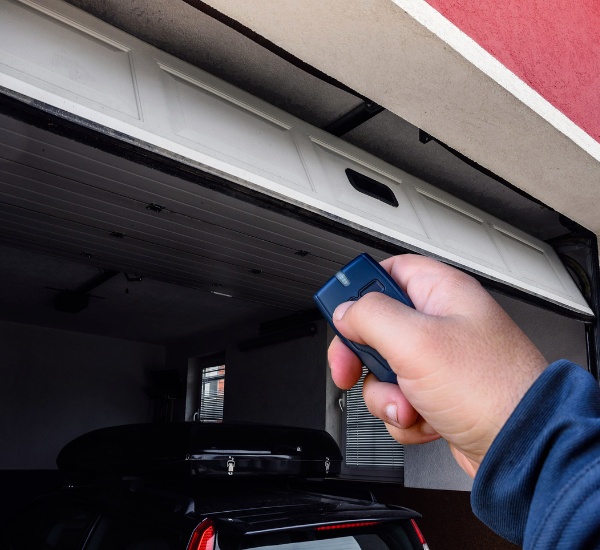
- Replace the remote battery. Most remotes use a flat 3-volt coin cell that dies every one to two years, sooner in hot garages. A dying battery shows up first as short range: the remote works only when you're inside the garage. Swap in a fresh cell before assuming the remote itself failed.
- Test the wall button. If the wall button opens the door but the remote doesn't, the problem is the remote or its battery, not the opener. If neither works, you're back to a power issue or a failed logic board.
- Inspect the photo-eye sensors. Two small units sit a few inches off the floor on either side of the opening. If anything blocks the invisible beam, or the eyes got knocked out of alignment, the opener refuses to run. Clear cobwebs and leaves from both lenses, then check the LED indicator lights. Both should glow steady. Realign the sensors until they do.
- Look for a track obstruction. A rolled ball, a broom handle, or a rock against the track can stop the door. Openers that start, move a few inches, then stop and reverse are often reacting to something in the track or an over-tight force setting.
- Check the trolley. If the opener motor runs but the door doesn't budge, the trolley may be disengaged. Someone pulled the red manual-release cord, perhaps during a power outage. With the door closed, pull the cord toward the door until the trolley clicks back onto the drive rail, then run the opener a full cycle.
- Check the springs, then stop. Look at the torsion spring above the door opening. A two to three inch gap in the coil, or a spring hanging in two pieces, means it snapped. You may also recall a loud bang from the garage earlier in the day. Do not try to open the door, and do not attempt the repair. Broken springs are the number one DIY injury risk on garage doors. Call a professional for spring replacement.
- Listen to the motor. A hum with no movement points to a stripped drive gear or a failed capacitor inside the opener. A single click with nothing else usually means the capacitor. Both are repairable. Most opener repairs in Los Angeles run $100 to $300 when caught early.
- Check the manual lock. Some doors, especially older ones in Encino and Van Nuys, have a slide bolt or quarter-turn lock on the rail or an interior panel. If it's engaged, the door physically cannot move, and forcing the opener will bend something. Slide it to the open position and test again.
Sensor problems hide in plain sight
Sensor issues are the most common reason a garage door won't open or close on cue, and the cheapest to fix. The photo-eyes must face each other exactly. A light bump from a trash can, a bike leaning on the track, or a buildup of Valley dust on the lens breaks the beam. Wipe both lenses with a soft cloth, loosen the wing nut on the blinking side, rotate it slowly until both indicator lights hold steady, then retighten. If one light stays dark no matter what, the sensor or its wiring is faulty and needs professional sensor repair. And if your door closes partway and then pops back open, that is usually the same sensor story — our guide to a garage door that closes then reopens walks through the other two causes.
Symptom to Likely Cause
Match what your door is doing against this table before you call anyone. It narrows the diagnosis fast.
| Symptom | Likely cause | What to do |
|---|---|---|
| Opener completely dead, no lights | Tripped breaker or GFCI | Reset breaker and outlet |
| Remote works only up close | Weak remote battery | Replace coin cell |
| Wall button works, remote doesn't | Remote battery or remote | New battery, then reprogram |
| Opener light blinks, door reverses | Sensor beam blocked or misaligned | Clean and realign sensors |
| Motor runs, door stays put | Trolley disengaged or stripped gear | Re-engage trolley, then call for gear |
| Loud bang, door stuck shut | Broken torsion spring | Stop. Call a professional |
| Door starts, moves inches, stops | Track obstruction or force setting | Clear track, test again |
When to Stop and Call a Professional
Three failures are off-limits for DIY: springs, lifting cables, and a door that has come off its track. Torsion springs hold hundreds of pounds of stored energy even when the door is closed. Cables under tension can whip when released. An off-track door can drop a section without warning. In all three cases, keep the door closed, disconnect nothing, and keep people away from the opening.
Everything else on the checklist is safe to try yourself. If the nine steps don't get the door moving, a licensed technician can diagnose it on site. Our Los Angeles garage door repair visits start with a full inspection and a free, itemized quote before any work begins.
"Excellent service. Show up an hour after I called to service a door put in by another company. Fixed the problem, declined payment and gave us helpful tips. Highly recommend. Will definitely use them from the start next time" — Community House, Google Review
Why Doors Fail More Often in the San Fernando Valley
Heat is the quiet culprit behind many "garage door won't open" calls in Woodland Hills, Reseda, and Sherman Oaks. Garage interiors routinely hit 110 degrees in summer. That heat dries out lubricant, weakens remote and keypad batteries, and accelerates metal fatigue in springs already past their cycle life. A spring that would last ten years in a coastal climate may give out sooner in an unshaded Valley garage. An annual tune-up, lubrication included, catches most of this before the door quits on a workday morning.
Stuck door and the checklist ran dry? Call (818) 919-0785 Monday through Friday, 8 AM to 6 PM, or request a free estimate online and we'll schedule a weekday visit that works for you.
Frequently Asked Questions
Quick answers to the questions we hear most about doors that won't open.
Usually the trolley is disengaged or an internal gear has stripped. Pull the manual release cord toward the door to re-engage the trolley, then test. If the motor still hums with no movement, the drive gear or capacitor is likely worn out and the opener needs professional repair, typically $100 to $300 in Los Angeles.
Yes, in most cases. With the door fully closed, pull the red manual release cord down and toward the door, then lift the door by hand. It should feel manageable. If the door feels extremely heavy or will not stay up, a spring is likely broken. Stop and call a professional.
Three clues point to a broken spring: you heard a loud bang from the garage, you can see a two to three inch gap in the torsion spring coil above the door, and the door feels dead heavy when lifted manually. Never attempt spring repair yourself. Professional replacement in Los Angeles typically runs $150 to $350.
It depends on the cause. Simple fixes like sensor realignment or a remote reprogram sit at the low end, while spring or opener repairs cost more. Most Los Angeles repairs fall between $150 and $500. We give a free, itemized on-site estimate before any work begins.
The usual culprits are a physical obstruction in the track, photo-eye sensors that are dirty or misaligned, or an opener force setting set too tight for a door that has gotten heavy. Clear the track, clean both sensor lenses, and try again. If the door still stalls partway, the springs may be too far gone to lift the load — stop and have the door inspected.
No. Estimates are free and itemized on site, and the price is approved before any work starts. We schedule visits Monday through Friday, 8 AM to 6 PM, across the San Fernando Valley and greater Los Angeles.
Keep Reading
More troubleshooting guides from the EM Garage Doors team.