
Driveway Gate Maintenance Checklist for Los Angeles Homes
A season-by-season maintenance checklist for automatic driveway gates in LA — hinge and roller lubrication, monthly safety photocell tests, rust care for coastal versus Valley air, and post alignment after rain and Santa Ana winds.
Maintain an LA driveway gate by the season: lubricate hinges and rollers twice a year, test safety photocells monthly, touch up rust before it spreads, and check post alignment after heavy rain or Santa Ana winds. Coastal gates need more corrosion care; Valley gates fight heat and dust.
An automatic gate is a machine that lives outdoors twelve months a year, and Los Angeles gives it three different jobs depending on where it stands. In the Valley, it bakes: summer heat bakes grease thin, bakes seals brittle, and packs dust into every roller. On the coast, it corrodes: salt fog works into scratches and welds and undoes steel quietly. In the hills, it hangs on: slope, rain-shifted soil, and Santa Ana winds conspire against post alignment. The gates that last decades in this city are the ones on a schedule — and the schedule is shorter than most owners think.
This is the checklist we hand customers when they ask what they should be doing between service visits. Most of it takes twenty minutes. None of it requires touching the operator's electrical side, which is where homeowner maintenance should end and ours begins.
The Maintenance Schedule at a Glance
| Task | How often | Why it matters |
|---|---|---|
| Safety photocell and auto-reverse test | Monthly | Keeps the UL 325 entrapment protection actually protecting |
| Lubricate hinges, rollers, pulleys, chain or screw | Twice a year | Cuts friction that wears motors and hardware |
| Clean sliding gate track and check roller condition | Quarterly | Debris is the top cause of strain and stopping faults |
| Rust inspection and paint touch-up | Yearly (quarterly near the ocean) | Stops surface rust before it becomes structural |
| Post and frame alignment check | Yearly, plus after storms | Catches sag before it binds the gate or kills the operator |
| Operator battery test and electrical service | Yearly, by a pro | Backup batteries fade invisibly until the outage arrives |
Monthly: Test the Safety Photocells
This is the one task that outranks everything else, because it is the one standing between a heavy gate and a person or pet in the wrong place. The Door & Access Systems Manufacturers Association and the UL 325 standard both treat entrapment protection as the core of gate safety, and the test could not be simpler. Start the gate closing, then pass a broomstick or your leg through the beam between the two photo eyes, about a foot above the ground. The gate should stop and reverse the moment the beam breaks. Wipe the lenses clean while you are there — a dusty lens eventually behaves like a broken one.
If the gate keeps closing through an interrupted beam, stop using the automatic function and call for service. That is not a maintenance item; that is a safety failure. And a note on the honest side: a gate that reverses constantly is annoying, but the answer is fixing the alignment or the wiring — never bypassing the photocells.
Twice a Year: Lubrication Done Right
Lubrication is where most of the wear on LA gates gets decided. Dry hinges make a swing gate heavier every month, and a heavier gate is a harder-working motor. Use a silicone-based lubricant or white lithium grease on hinge pins, rollers, pulleys, and the chain or screw drive, and wipe off the excess so it collects grit instead of shedding it. What not to use matters just as much: penetrating sprays are solvents dressed as lubricants — great for freeing a stuck part, useless a week later as protection. After lubricating, cycle the gate a few times and listen. A quiet gate on fresh lube is the sound of a motor that will outlive its warranty.
On sliding gates, lubrication pairs with track cleaning. The v-track collects the neighborhood: leaf litter, gravel from the driveway edge, string-trimmer line. A stiff brush and a wet-dry vacuum make quick work of it quarterly. Watch the rollers while you are down there — flat spots, wobbling, and visible wear mean they are due, and worn rollers are the quiet beginning of the "gate not closing fully" calls we handle.
Rust Care: Coastal Gate vs Valley Gate
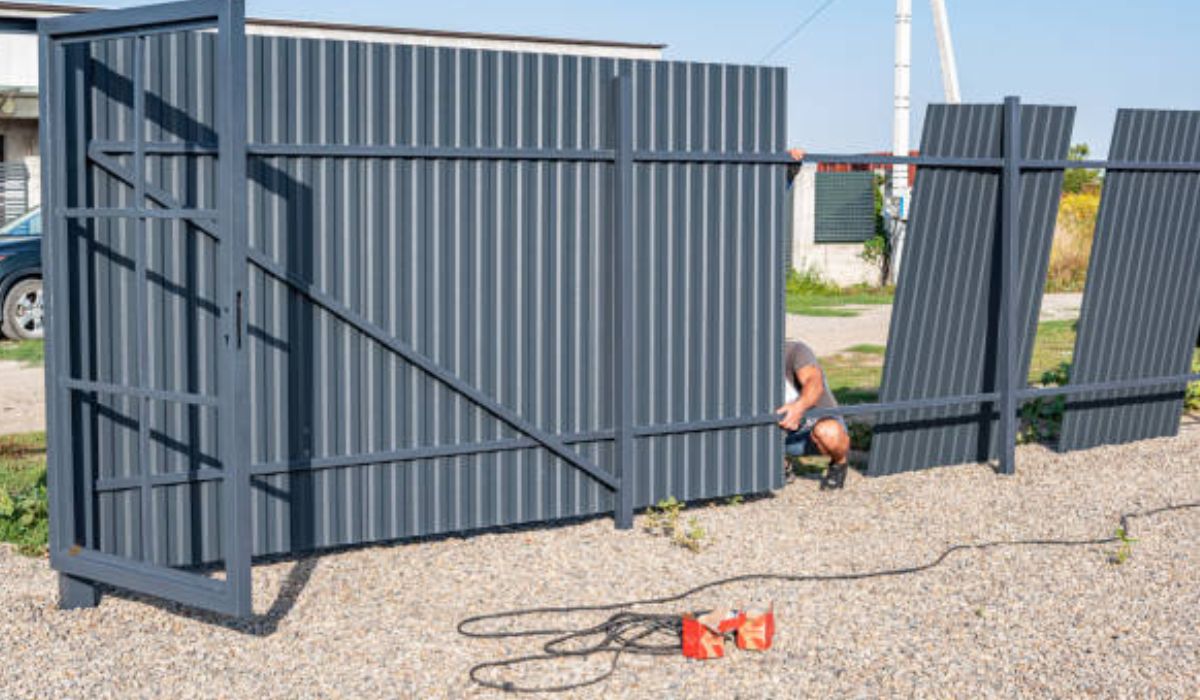
Los Angeles maintenance splits hardest on this line. Near Santa Monica, Marina del Rey, and the beach cities, salt air is relentless: it finds every chip in powder coat and every bare weld bead, and rust that starts as a freckle becomes a hole. Coastal care means rinsing the gate and hardware with fresh water regularly, touching up paint chips immediately with a matching coating, and treating any orange bloom with a wire brush and rust converter before repainting. If a coastal gate is due for replacement hardware, stainless steel and powder-coated aluminum parts earn their premium every time — the rust repair guide for coastal LA covers the same fight on the garage door side of the property.
Valley gates in Northridge and across the basin fight a different enemy: heat and dust that cook lubricants thin and drive soil cracks into post footings. Sprinkler spray is the hidden rust driver here — irrigation that hits a gate post daily does coastal-style damage without any ocean in sight. Redirect heads, and check the base of posts where water pools and soil stays damp. Either environment, the rule is the same: rust found early is a touch-up; rust found late is a fabrication job.
Post Alignment: The Structural Item
Everything above bolts to the posts, and posts move in Los Angeles. Hillside lots settle with rain cycles, expansive soils shrink in drought years and swell in wet ones, and a big solid-privacy gate acts as a sail in Santa Ana gusts — transferring leverage straight into the footings. The signs of post movement are visible from the driveway: a gate leaf that sags, a latch line that no longer meets, a gap between leaf and post that changes with the season, or a gate that binds at the same point of every cycle. Catching movement early usually means re-plumbing a post or repacking a footing. Ignoring it transfers the load to hinges, rollers, and finally the operator — the most expensive possible chain of consequences for something that starts as a quarter-inch of drift.
While checking posts, look at the hinge hardware itself for play, cracked welds, and missing fasteners, and confirm the gate still swings or slides freely by hand with the operator disengaged. A gate that drags by hand is telling you the motor is already paying its bill.
What Belongs to a Pro
Everything electrical stays on our side of the line: the operator's internal service, battery testing and replacement, limit and force settings, wiring and control board work, and anything involving the gate's structural steel. Twice-yearly and annual service visits cover those, along with the adjustments that need trained hands and load testing. Maintenance calls are among the least expensive visits we make — a fraction of the motor, hinge, or fabrication work they prevent. If your garage doors deserve the same treatment, our garage door maintenance service runs the same kind of schedule, and the garage door maintenance checklist is the door-side version of this guide. For the access-control devices on the gate — keypads, intercoms, loops — the gate access control options guide explains what each device needs over time.
"Edi repaired the side gate of my house very quickly. He was very efficient and did a great job. I highly recommend this business!" — Michi, Google Review
To schedule gate maintenance or a tune-up, call (818) 919-0785 or use the contact page. We work Monday through Friday, 8 AM to 6 PM, and quote any follow-up repairs before touching a thing.
What a Tune-Up Covers
A professional gate tune-up at EM Garage covers the full friction and safety chain: hinges and rollers serviced, chain tension checked, photocells tested under real load, motor draw measured, battery load-tested, and every fastener on the frame torqued. You get a written rundown of what was serviced and what is wearing — so the decision on any follow-up repair is made with prices approved up front, never as a surprise. Our gate repair service handles anything the inspection turns up, usually the same visit.
Gates we maintain tend to need motors less often. That is the whole pitch for maintenance, honestly told: it does not make parts immortal, it makes them predictable.
Gate Maintenance FAQ
Common questions about keeping a driveway gate healthy.
Plan on lubricating hinges, rollers, and the chain twice a year, and a fuller tune-up annually. Coastal gates do better on quarterly rust checks because salt air works faster than most owners expect.
Yes. A silicone-based or white lithium lubricant on hinges, rollers, pulleys, and the chain or screw is homeowner-safe work. Avoid using penetrating sprays as a long-term lubricant — they clean but do not protect, and the friction returns quickly.
Once a month, start the gate closing and wave a broomstick through the beam path a foot off the ground. The gate should stop and reverse immediately. If it keeps closing, stop using it and have the photocells serviced — that test is the whole point of the safety system.
Rinse the gate and hardware with fresh water regularly, touch up paint chips on steel before rust blooms, and keep drainage away from post bases. Within a few miles of the ocean, powder-coated aluminum and stainless hardware outlast standard steel by years.
Eventually, yes — especially in LA. Hillside soil shifts with rain cycles, and Santa Ana winds push big gates around. If a gate sags, binds at the same spot, or the gap between leaf and post changes through the seasons, the posts have moved and need attention before the operator pays the price.
Routine tune-ups are among the least expensive visits we make — far below a motor or hinge replacement. If maintenance uncovers wear, repairs on automatic gates typically run the same ranges as our standard gate repairs, and we quote any follow-up work free before starting.
Keep Reading
Related maintenance guides and gate services.