
Garage Door Panel Replacement Cost: Repair, Replace, or New Door?
A backed-into door doesn't always mean a whole new door. When a single panel replacement makes sense, how to match an older door's brand and color, and the honest math on when a new door wins.
A single damaged panel is worth replacing when the door is reasonably young and the model is still made — it usually costs far less than a full door. For discontinued models, rust, or damage across several sections, a new door ($1,000–$4,000 installed) often makes more sense.
The basketball dented it years ago. Then the bumper caught the bottom section backing out. Now every time you pull into the driveway, the door is the first thing you — and every neighbor — see. The question is rarely whether to fix a damaged panel; it's whether one section replacement will actually do, or whether you're patching a door that's past its prime.
We replace panels weekly across Woodland Hills and the West Valley, and the honest answer splits three ways: small damage repairs, single sections replace, and sometimes the whole door deserves retirement. Here's how to tell which bucket you're in — and what each costs.
Repair, Replace, or Retire: The Three-Way Call
| Your situation | Best move | Why |
|---|---|---|
| Shallow dent, paint scuff, one small hole | Panel repair / bodywork | Cosmetic damage doesn't compromise the section; filler and paint cost least |
| One section creased, cracked, or bowed | Replace that panel | Door is structurally fine otherwise; a matched section restores it fully |
| Damage to two or more sections | Price both options | Multiple panels can approach new-door money; compare before committing |
| Door 20+ years old with fraying cables, tired springs | New door | Panel spend lands on a system already near the end of its life |
| Rusted-through panels (coastal or sprinkler exposure) | New door | Rust rarely stays in one section; replacement repeats within years |
| Discontinued model, no panel available | New door, or salvage panel | Factory panels don't exist; matched salvage is the only middle path |
One rule of thumb from ten years of doing this: if the repair quote for sections plus the wear items the door already needs (springs, rollers, cables) adds up to a meaningful fraction of a new installed door, buy the new door. You get fresh springs, new track, a full warranty, and a door that isn't a patchwork of two eras.
What Affects the Price of a Panel Replacement
Panel work for common, still-manufactured doors usually lands inside our typical repair range — the $150 to $500 band that covers most straightforward jobs — with insulated and windowed sections, taller doors, and custom finishes pushing toward and past the top of it. The variables that move the number:
- Availability. Current-production models ship quickly. Discontinued ones don't ship at all.
- Insulation. An insulated section costs more than a pan door's, and matters more in a Valley garage that hits summer temperatures.
- Windows and vents. Glass inserts and vented sections multiply the price of the affected panel.
- Finish. Painted-to-match costs less than factory wood-grain or a custom color match.
- Labor scope. Bottom sections carry cable attachments; a bottom-panel swap is more involved than a top one.
We quote panel work on site, line by line, and the estimate is free — comparing it against a new-door quote costs you nothing either. See our new garage door cost guide for the full installed-door math, which typically runs $1,000 to $4,000 depending on material and insulation.
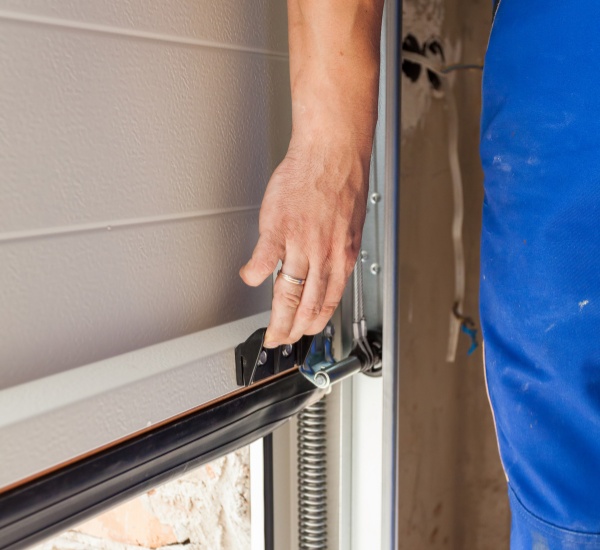
Replacing one panel is a real repair
A factory-matched section, installed square with fresh hardware, restores the door's structure and looks completely. It's the standard move for doors under about fifteen years old from living brands.
What it can't do is turn a worn door into a young one — the springs and cables keep the birthdays they have.
Matching an Older Door: Brand, Color, Texture
Panels are brand- and model-specific. A Clopay section won't seat in an Amarr frame; the profiles, hinge placements, and tongue-and-groove profiles differ. The big three manufacturers — Clopay, Amarr, and Wayne-Dalton — each kept long production runs, which helps, but texture and color batches drift over the years. A ten-year-old panel next to a fresh one from the same line can shade differently until sun weathers them together.
Start by finding the door's model: a sticker on the inside face of a section, the edge of a panel, or the original paperwork. With a model number, a dealer or installer can tell you in minutes whether the section still exists. No sticker? A technician can usually identify the manufacturer from the hinge style and track profile — it's a big part of what our garage door panel repair service does on the first ten minutes of a visit. For doors whose models are gone, the honest answer is usually a new door; hunting a color-matched salvage panel is possible but rarely worth the wait.
When a New Door Makes More Sense
Beyond the multi-section and rust cases above, three more situations tilt toward replacement. First, older uninsulated doors: if you're already spending real money on a panel, upgrading to an insulated door buys quieter operation and a cooler garage — meaningful in Valley summers, and worth reading our insulation guide before deciding. Second, doors with obsolete parts: if the model is discontinued and the springs are near replacement age anyway, the panel spend has no foundation under it. Third, style: homeowners replacing a front-facing door for curb appeal often find the jump from "repaired old door" to "new modern door" is smaller than expected once panel costs stack up. Our garage door installation service handles the full swap, and the curb-appeal math is covered in our garage door value guide.
"The price was reasonable." — Bob Serna, Google Review
What We See Most Often in the Valley
The two panel calls that dominate from Tarzana to Chatsworth: bottom sections backed into on steep driveways, and basketball dents on doors facing the court-sized slabs of 1960s–70s tract homes. The first usually replaces one panel; the second often just needs bodywork. What we rarely see is a door where panel replacement was the wrong call — as long as the model check happened first. That check is where we start every time.
Dented, cracked, or mismatched? Call (818) 919-0785 Monday through Friday, 8 AM to 6 PM, or request a free estimate online — we'll bring both numbers, panel and new door, to the visit.
Panel Replacement FAQs
The panel questions homeowners ask most after a dent or a dinged door.
For common, still-manufactured doors, a single panel replacement typically falls inside the usual $150 to $500 repair band, with insulated, windowed, or custom-finish sections pushing higher. The exact price depends on the model's availability and which section is damaged — bottom sections carry cable hardware and take more labor.
Usually, if the model is still in production. Panels are brand- and model-specific, and color batches can shade slightly differently even within one line — a new section may take a season of sun to blend perfectly. For discontinued models, factory color matching is off the table, which is why we identify the model first.
Yes, when a matching panel exists. Bottom sections take the most hits — bumpers, basketballs, moisture — and they're replaceable. The job involves the lift cables and their attachments, so it's professional work, but it's far cheaper than a full door when the rest of the door is sound.
Look for a sticker on the inside face of a section or the edge of a panel, or check your original purchase paperwork. No label? An experienced technician can usually identify the manufacturer from the hinge style, roller type, and track profile in a few minutes on site.
Often, yes — vehicle damage to a garage door is frequently a covered homeowners claim, unlike wear-related failures. Take photos of the damage and the vehicle position before anything moves, then get a repair quote; the documentation makes the claim straightforward.
When damage spans multiple sections, when the door's model is discontinued, or when the repair quote stacks on top of a door already needing springs, cables, and rollers. In those cases the combined spend approaches the $1,000-to-$4,000 range of a new installed door — with fresh hardware and a full warranty. We price both options on every panel visit.
Keep Reading
More guides from the EM Garage Doors team.