
How to Choose a Garage Door for Your Los Angeles Home
A new garage door is one of the few purchases that changes how your whole house looks. This five-step framework walks through budget, architecture, materials, insulation, and installation, with LA-specific guidance at each step.
Match the door to your home's style, your budget, and the LA climate. Steel is the value default for most homes, aluminum and glass suit modern builds, and wood-look finishes fit Spanish revival. Insulation matters even in warm climates.
Learning how to choose a garage door is mostly learning what to decide first. Most buyers start with color or photos, get anchored on a look they can't afford, and settle for whatever's left. The better order runs the other way: budget, then architecture, then material, then insulation, then installation. Follow it and the options narrow themselves. On a street-facing garage in Encino or Northridge, this one purchase can swing the whole curb appeal of the house, so the five minutes of framework below pay for themselves.
How to Choose a Garage Door: The 5-Step Framework
Step 1: Set the budget before you browse
A single-car steel door, installed, sits at the accessible end of the market, and prices climb from there with insulation, windows, custom colors, and premium materials. Decide the ceiling first, including a little room for the opener if that's also aging. For typical LA figures by material and style, our new garage door cost guide for Los Angeles lays out the ranges. A budget decided after falling in love with a door is not a budget.
Step 2: Match the architecture, not the catalog
The door should look like it came with the house. Raised-panel steel suits classic tract homes. Carriage-house styles suit Craftsman and farmhouse looks. Flush and full-view doors suit mid-century and modern. Photograph your facade from the street and hold it against door styles; a door that fights the architecture reads as a mistake from the curb every single day. Bring photos of neighboring homes you admire as well, since a door that harmonizes with the street tends to hold its value at resale better than one that shouts.
Step 3: Pick the material
| Material | Cost tier | Upkeep | Best for |
|---|---|---|---|
| Steel | Lowest to mid | Minimal | Most homes; the value default |
| Aluminum + glass | Mid to high | Low | Modern and contemporary homes |
| Wood | High | Regular sealing or staining | Period homes where authenticity wins |
| Wood-look composite | Mid | Low | Spanish revival without wood upkeep |
Steel is the value default in Los Angeles for good reason: durable, paintable, inexpensive, and available insulated. Aluminum framed with glass panels is the signature of modern builds from the Westside to new construction in Chatsworth. Real wood is beautiful and demanding, needing resealing against sun and, near the coast, salt air. Wood-look composite splits the difference, delivering the warm grain Spanish revival homes want with close-to-steel maintenance.
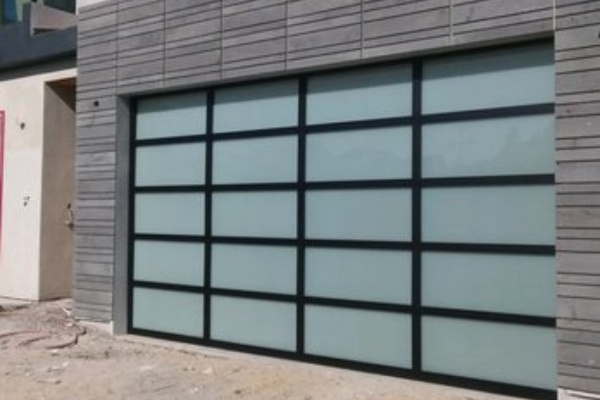
Windows and color are part of the material decision because they change both the look and the upkeep. Frosted or tinted glass preserves privacy while admitting light; clear glass suits showcase garages and nobody else. On color, factory-applied finishes resist Valley sun far better than aftermarket paint, and lighter tones hide dust and heat expansion better than dark ones on west-facing facades. Choosing glass and finish alongside the material avoids ordering a door you immediately want to repaint.
Step 4: Decide on insulation
Insulation sounds unnecessary in Southern California until August, when an uninsulated Valley garage acts like a thermal battery that cooks everything inside it and radiates heat toward adjacent rooms all evening. An insulated core, measured in R-value, keeps the garage cooler in summer, warmer in the brief cold snaps, and quieter year-round. It matters most when a bedroom or living space sits above or beside the garage. If you're upgrading an existing door rather than replacing it, our insulation service page covers the options, and our San Fernando Valley heat wave prep guide is the companion read for the rest of the garage.
Step 5: Have it professionally installed
The door is a counterweight system under tension, and a misinstalled one is a safety hazard that also eats openers. A proper installation includes tracks set true, springs matched to the door's exact weight, and safety features tested. A complete job replaces the springs too; reusing old springs on a new door is the most common installation shortcut, and it produces exactly the crooked, strained operation you paid to get rid of. It's the least glamorous step and the one that decides how the next fifteen years feel. Our installation service in Los Angeles quotes every job free, on site, before work begins.
Matching the Door to LA Architecture
Three looks dominate local requests. Spanish revival: wood-look carriage or recessed-panel doors in warm tones echo the stucco and clay tile; this style is everywhere from Highland Park to the older Valley streets. Mid-century: flat, flush doors preserve the clean horizontal lines of postwar homes in Sherman Oaks and Studio City adjacent; add slim windows high on the door for the period look. Modern: full-view aluminum and glass doors, often black-framed, anchor new builds and remodels; frosted glass buys privacy while keeping the look. When the door dominates the front facade, as it does on so many LA lots, the style choice is effectively the face of the house.
Near the coast, add one more criterion: corrosion resistance. Salt air is hard on steel, so homes in the beach cities often lean toward aluminum frames or composite panels that shrug off marine air. Ten miles inland, in Encino or Reseda, that concern fades and every material is back on the table.
One LA-Specific Step Most Guides Skip: Check Your HOA
Before you order anything, check whether your community's CC&Rs restrict exterior changes. Plenty of associations across the Valley, from townhome complexes to hillside developments, specify acceptable door colors, materials, or styles, and some require written approval first. Discovering this after delivery is an expensive education. Your HOA board or management company can tell you in one phone call.
Set expectations for upkeep before the door goes in. Steel asks almost nothing beyond a wash and a touch-up on nicks. Wood-look composite wants an occasional rinse. Real wood wants resealing every few years, and more often in full sun. Budgeting the maintenance along with the purchase price keeps the door looking like it did on install day instead of aging five years in two.
On brands: Clopay, Amarr, and Wayne Dalton cover most of the LA market, and the brands we install page, plus our three-brand comparison, can narrow that choice further.
"Edi repaired the side gate of my house very quickly. He was very efficient and did a great job. I highly recommend this business!" — Michi, Google Review
Want a second opinion on a door you're considering? Call (818) 919-0785 Monday through Friday, 8 AM to 6 PM, or request a free estimate online and we'll walk the options with you at your home.
Frequently Asked Questions
Common questions from LA homeowners choosing a new door.
Steel. It hits the sweet spot of price, durability, and low upkeep, which is why it dominates tract homes across the Valley. Aluminum and glass full-view doors lead the modern segment, and wood-look finishes are the go-to for Spanish revival homes that want the look of wood without the maintenance.
For most homes, yes. An insulated door keeps the garage cooler through Valley summers, quiets street noise, and matters more if a room sits above or beside the garage. If the garage is detached and used only for storage, insulation moves down the priority list.
A standard replacement typically takes a few hours once the door arrives. The technician removes the old door, installs the new tracks, springs, and sections, then balances the system and sets the opener. Complex custom doors or conversions take longer, and we quote timelines with the estimate.
It can, in communities with active CC&Rs. Many Valley associations specify acceptable colors, materials, or styles, and some require approval before exterior changes. Check your CC&Rs or contact the HOA board before ordering a door, so the style you want is the style you're allowed to install.
Most LA homeowners spend $700 to $2,500 installed for a standard steel door on a single-car opening. Double doors roughly double the door cost, and custom glass, wood, and faux-wood finishes run higher from there. Set the ceiling before you browse — with a little room for the opener if that is aging too — then confirm with a free on-site quote.
Salt air is the deciding factor in Santa Monica and Marina del Rey. Aluminum and glass shrug off rust entirely; galvanized steel with a good finish also performs well but benefits from an occasional rinse. Wood looks beautiful at the beach but demands the most upkeep. Whatever the material, coastal doors need their hardware and springs checked more often than inland doors.
Keep Reading
More buying guides from the EM Garage Doors team.