
Garage Door Weather Stripping in Los Angeles: Seals, Thresholds, and Stops
The rubber and molding that seal your garage door take a quiet beating from Santa Ana dust, rain-sheeting storms, and Valley heat. Here is what each seal does, what wears it out in LA, and when the job is honestly a DIY one.
A garage door seals at four points: the bottom astragal, the threshold, and the stop molding along both sides and the top. In LA, heat cracks the rubber, Santa Anas drive dust through gaps, and rain finds every opening. Replacing worn seals is a modest-cost job that pays back in comfort and cleanup.
Weather stripping is the least glamorous system on a garage door, and one of the most common reasons people call us about a garage that "just feels wrong." The tell is familiar: a fine film of dust on everything within six feet of the door, a puddle creeping under it during a February atmospheric river, or a strip of daylight along the bottom on a summer evening in Woodland Hills where the sun sets straight down the driveway.
Los Angeles is not hard on seals the way Chicago is — no ice heave, no snow load. It is hard in its own specific ways, and understanding them tells you exactly what to check and when.
The Four Seal Zones on a Garage Door
A residential door seals at four points, and each fails differently.
| Seal zone | What it is | What kills it in LA |
|---|---|---|
| Bottom seal (astragal) | Rubber or vinyl strip in a channel on the door's bottom edge | UV and Valley heat bake it stiff until it cracks |
| Threshold | Rubber or aluminum ramp bonded to the floor under the door | Driveway slope, cracked concrete, storm-sheeting water |
| Side stops | Stop molding with a flexible flange nailed along both jambs | Heat checks the paint, nails loosen, flange flattens |
| Top stop | Header molding the door presses against when closed | Sun exposure on west-facing garages, settling of older framing |
The Bottom Seal: LA's Fastest-Wearing Strip
The astragal takes the most abuse because it is the only seal that carries weight — it compresses against concrete every cycle, thousands of times a year, in a garage whose interior temperature swings from cool January mornings to 110-degree-plus August afternoons. Rubber does not love that. It plasticizes, goes hard, and cracks at the stress points until the door is riding on a rigid strip that seals about as well as a garden hose.
The test takes ten seconds: with the door closed, look for daylight underneath, then press the seal with a thumb. Healthy rubber flexes and springs back. A failing seal feels like a pencil eraser left on a dashboard — hard, glazed, often split lengthwise. On Valley floors with the classic hairline concrete cracks, the seal also grinds grit into itself, which accelerates the wear on both the rubber and the channel holding it.
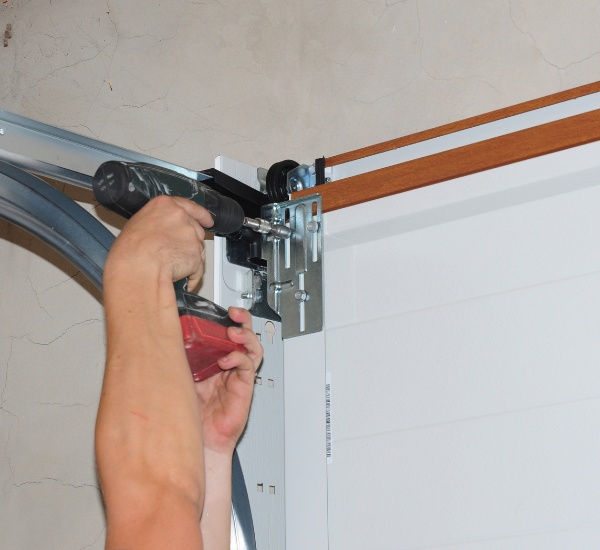
When the bottom seal is honestly a DIY job
Here is the straight answer: if your door is balanced, the retainer channel is straight and clean, and the seal slides in from the side, replacing it is one of the few garage door jobs a careful homeowner can do. It takes two people, a flat screwdriver to start the old seal out of the channel, and a spray of soapy water to help the new one slide. Buy the right profile — T-style and bulb seals are not interchangeable.
It stops being DIY the moment cable tension enters the picture. On some doors the seal channel shares fasteners with the bottom fixtures, where the lift cables attach under spring tension. Those brackets are pro-only territory, full stop. If the channel itself is bent, the floor is uneven enough that the new seal cannot seat evenly, or the door needs balancing to press the seal properly, that is a garage door repair visit, not a hardware-store afternoon.
Thresholds: When the Driveway Works Against You
Most LA garages do not need a threshold — a sound bottom seal on level concrete holds the line. The exception is the garage at the bottom of a slope. When a storm cell parks over the Valley and rain sheets across the driveway like a river, a door at the low point of the grade faces water with head pressure behind it, and no bottom seal alone holds that back indefinitely.
A threshold — a low rubber or aluminum ramp bonded across the floor under the door — raises the effective waterline and gives the seal a flat, even surface to press against. It also corrects the cracked, sunken concrete pads common under doors of 1960s and 70s tract homes from Reseda to Chatsworth. If water has entered the garage more than once, a threshold plus a healthy seal is the fix; if it happens every few years during freak storms, judge accordingly.
Side and Top Stops: The Dust Highway
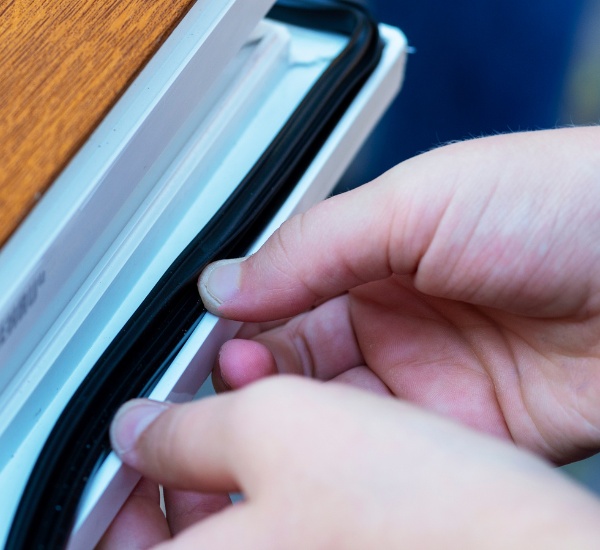
The stop molding along the jambs and header is wood or molded composite with a flexible vinyl flange that the closed door presses against. Two things go wrong with age: the flange flattens and stiffens, and the nails holding the molding loosen as the framing expands and contracts through a hundred-degree annual swing.
This is where Santa Ana season gets personal. When the winds kick up, the pressure differential pushes fine dust through every gap flanking the door — the gaps you cannot see in calm air. Homeowners in the west Valley sometimes blame the roof or the vents, then stand inside the closed garage during a wind event and watch the dust ride in along the jambs. Replacing or re-nailing the stops and fitting fresh flanged molding closes that highway. It is carpentry-adjacent work, unglamorous, and it makes a bigger comfort difference than nearly anything else this inexpensive on a door.
What Weather Stripping Costs — Honestly
Seal materials are modest; among the least expensive parts on any door. But quoting a firm price sight-unseen is how homeowners get surprised, because the labor depends on things you can only see in person: whether the channel is reusable, whether the stops need re-nailing or full replacement, whether the floor wants a threshold, and the door's size and condition. So we treat weather stripping like everything else — quoted after an inspection, price approved before work starts, often bundled into the same visit as lubrication and a safety check so you are not paying a trip charge for a rubber strip.
If you keep up with the DIY items in our garage door maintenance checklist — including that ten-second daylight test under the closed door — you will catch failing seals early, which keeps this forever in the "modest" column instead of the "water damaged the drywall" column.
"Very professional, would recommend his service" — Chong Li, Google Review
Dust, water, or daylight getting past your garage door? Call (818) 919-0785 Monday through Friday, 8 AM to 6 PM, or request a free estimate and we will check all four seal zones in one visit.
Weather Stripping FAQ
Common questions about sealing a garage door in Los Angeles.
A bottom seal or astragal typically lasts 5 to 10 years in Los Angeles. Valley sun bakes the rubber stiff until it cracks; coastal humidity rots it faster. Check the seal each season by looking for daylight under the closed door and by pressing the rubber — if it has gone hard and cracked instead of flexing, it is due.
If the retainer channel is intact and the door is in good balance, sliding in a new seal is one of the few genuinely DIY-able garage door jobs — it takes two people, a flat screwdriver, and soapy water to help the new seal slide. If the channel is bent, the floor is uneven, or the seal attaches at brackets under cable tension, hand it to a technician.
Gaps in the weather stripping are the usual reason. During Santa Ana wind events, air pushes through the gaps under and beside the door and drops fine dust as it slows inside. Hold a flashlight along the closed door's edges at night — every place light leaks through is a place dust is riding in.
The astragal is the bottom seal: a rubber or vinyl strip, usually T-shaped or bulb-shaped, held in a channel along the bottom edge of the door. It compresses against the floor to block dust, water, leaves, and pests. It is the fastest-wearing piece of weather stripping on the door because it takes the full weight of the seal against concrete thousands of times a year.
Usually not — a healthy bottom seal on a level floor does the job. A threshold earns its place when the driveway slopes toward the garage, the concrete under the door is cracked or sunken, or storm water sheets across the apron. The ramp gives the seal something even to press against and raises the waterline the door can hold back.
The materials are modest — seals and stop molding are among the least expensive parts on a door. The labor varies with door size, channel condition, and floor slope, so we quote after looking at the door rather than quoting a number that fits some doors and surprises others. The visit usually pairs well with lubrication and a safety check in one maintenance stop.
Keep Reading
More upkeep and decision guides from the EM Garage Doors team.