
Salt Air and Heavy Use: Garage Door Repair in Long Beach, CA
Long Beach runs denser than most coastal cities, with beachside condo blocks stacked against older two-story homes, and garages that open twice a day or more. Corrosion and cycle count grind on doors together here. This page covers how we service that combination.
Garage door repair in Long Beach fights on two fronts: salt air corroding springs, cables, and tracks, plus high cycle counts on blocks where the garage door opens daily. We set a corrosion inspection cadence, service condo doors in batched visits, and fix daily-use wear before it compounds. Free estimates, every job.
Long Beach garages work for a living. On the parking-heavy blocks near Belmont Shore and Bluff Park, the garage is not storage; it is the primary parking structure, opening for the morning commute and again at night, every day of the year. Stack the ocean-influenced air on top and you get a failure pattern our crews know by heart: parts that corrode like coastal hardware and wear out like commercial hardware, in homes whose owners did nothing wrong. The repair strategy that fits this city respects both clocks at once.
Garage Door Repair in Long Beach Runs on a Corrosion Calendar
Distance from the water sets the schedule. Doors on Ocean Boulevard and the Belmont Shore blocks take the full brunt of the marine air, and their hardware shows it first; two and a half miles inland in Bixby Knolls the salt load eases noticeably, though it never drops to what an inland neighborhood like Reseda sees. So the first thing we establish on any Long Beach call is where the property sits on that gradient, because it changes the inspection interval and the hardware we recommend. Near the shore, professional check-overs every 6 to 12 months catch spring rust while it is still surface film rather than deep pitting. Coated or galvanized springs, which our spring replacement service offers at modest upcharge, stretch that interval considerably, and on exterior gates the same logic applies to hinge pins and fasteners.
Material choices earn a longer conversation here than inland, because the water punishes some options and forgives others. Galvanized and coated steel holds its finish far longer than bare steel and accepts insulated construction, which matters for homes and condos that use the garage as a buffer space. Aluminum frames shrug off the rust that attacks steel stiles, at the cost of fewer insulation options and lighter panels that need accurately sized springs. Fiberglass and vinyl composites resist corrosion outright, though their look suits some facades better than others. There is no single coastal winner; the honest answer is the material matched to the building's exposure, its style, and how the household actually uses the door. We bring samples and trade-offs to the estimate rather than a default recommendation.
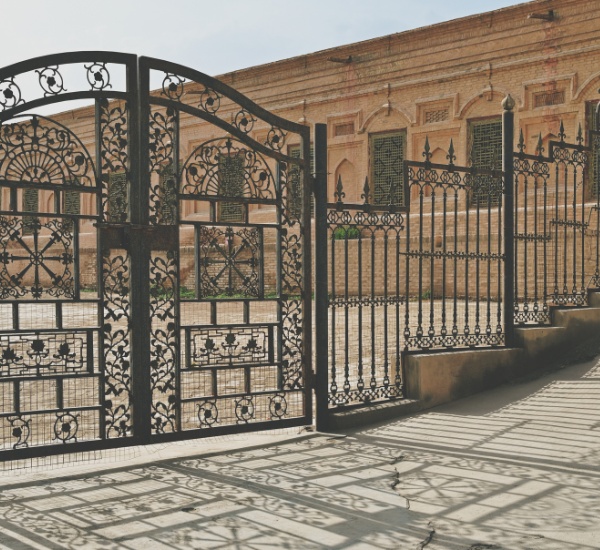
Visible rust is the late stage
By the time ironwork looks like this, matching corrosion has been running inside door springs and cable wraps for seasons. The calendar exists to intercept that hidden progress.
Condo and Multi-Unit Doors Across the Density
The dense stretch between the shoreline and Retro Row holds thousands of condo units and small apartment buildings with tuck-under or courtyard parking, typically four to eight doors per property sharing the same marine exposure. That shared exposure is an advantage when handled as a group: the corrosion, roller wear, and cable fraying arrive on neighboring doors within months of each other, so a batched service visit with one mobilization costs each unit less than solo calls. We write a separate free estimate per door, hand the association or owner a coordinated schedule, and work within weekday hours from 8 to 6 to keep the parking accessible. Buildings with heavier shared doors or gated entries fall under the same coordination logic our commercial service team uses, and we bring that discipline to residential-scale properties.
Everyday-Use Wear on Parking-Heavy Blocks
Cycle count is the quiet second attacker. A household that parks two cars in a tandem garage opens the door roughly 1,500 times a year, and each cycle takes a small toll: rollers flatten and develop flat spots that thump, tracks creep out of plumb a millimeter at a time, cables stretch unevenly and wind with a slight wobble, and bottom seals abrade against driveways that slope toward the alley. The door that shudders halfway up or settles crookedly is describing exactly this history. Alignment and roller service restore smooth travel in a single visit, and the payoff compounds: an opener that is no longer fighting friction lasts longer, and springs that run true break less often. This is also where honest triage lives. Some worn parts deserve replacement; others need adjustment only, and the maintenance visit structure we use separates the two on paper before you spend anything.
Opener strain deserves its own mention on high-cycle doors. Every point of friction from worn rollers or drifting tracks makes the motor work harder, and on a door cycling four times daily, that adds up to real motor hours. The two-minute check any homeowner can run: disconnect the opener with the release cord and lift the door by hand from closed. A balanced door lifts with modest effort and stays where you leave it; a door that slams down or fights upward is telling you the springs have drifted out of adjustment, and the opener has been quietly paying their bill. Catching that early converts a motor replacement into a spring adjustment, which is the cheaper side of that trade every time.
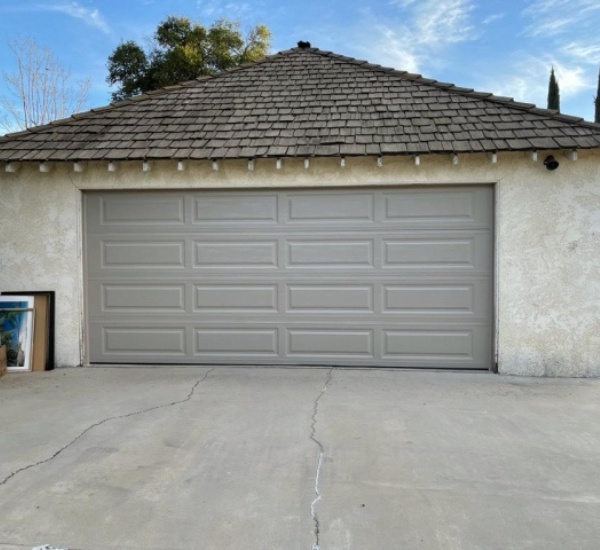
Exterior iron gates ride the same two clocks harder than the doors do, and this review from a gate customer captures the standard we aim for on corrosion calls:
"Edi was super courteous, respectful and honest. He resolved the issue with our electronic gate and was very reasonable with the cost. I will definitely be referring his company to everyone I know that needs repair or a new electronic gate." — billy r, Google Review
South of the city line, our Torrance service page picks up the South Bay story with its family-storage angle, and the full territory map lives on the service areas page. Weekday scheduling runs 8 to 6 everywhere we cover.
Emergency-Type Repairs We Run in Long Beach
Long Beach adds a saltwater multiplier to the standard sudden failures. Cables go first: corrosion climbs the strands from the bottom loop, and a line that looks surface-rusty can be days from parting. Sensor wiring and brackets corrode next, until the door refuses to close across a perfectly clear doorway. And because condo and rental blocks here run doors constantly, springs that would last a decade inland fatigue early — when one snaps above a Belmont Shore parking pad, a whole building feels it.
The repair set: off-track door repair, spring replacement with coated or galvanized stock for the marine air, safety sensor repair including corroded wiring cleanup, and cable repair in corrosion-resistant strand. Call (818) 919-0785 on weekdays — Long Beach is the far end of our range, so honest timing answers matter, and you will get them up front. The same southern loop covers Torrance and Huntington Park.
Long Beach Corrosion and Use Questions
Salt-air and high-cycle specifics, answered without sales language.
For homes within a few blocks of the water, a professional inspection every 6 to 12 months is the sensible rhythm, because salt keeps working on bare wire between visits. Farther inland toward the eastern neighborhoods, an annual check usually holds. The visit catches surface rust, fraying cables, and stiff rollers while the fixes stay small.
Yes, and it is usually the smart way to schedule. Tuck-under and courtyard parking often puts four to eight doors on shared structure, so similar corrosion and wear show up across units at once. We batch the visit, write a separate free estimate per door, and give the association or owner one coordinated schedule on weekdays from 8 to 6.
Daily cycling wears parts in a known order: rollers flatten first, tracks then drift slightly out of plumb, cables stretch unevenly, and the opener strains against the growing friction. Alignment and roller service typically restores smooth travel in one visit, and catching it early avoids the larger repairs that dragging eventually causes.
Spring replacement typically runs $150 to $350 in the Los Angeles area, coastal homes included. Near the water we also price coated or galvanized spring options, which cost somewhat more and resist salt pitting longer. The free written estimate shows both choices side by side before you decide.
Keep Exploring
More reading for coastal and high-use doors.