
Garage Door Repair in Torrance for Family Storage Garages
Torrance homes run some of the busiest garages in the South Bay: sports gear, workshop benches, spare refrigerators, and two cars competing for the remaining floor. That intensity shapes what breaks and what safety demands. This page explains our approach for exactly that household.
Garage door repair in Torrance centers on households that use the garage as storage, workshop, and parking at once. We run family-focused safety tests, seal and insulate doors for temperature-sensitive storage, and keep high-cycle parts in tune. Repairs typically run $150 to $500, always quoted free first.
A Torrance garage rarely holds just a car. On the family streets threading through South Torrance and Walteria, the typical two-car garage holds one car, a chest freezer, wall-to-wall shelving, a workbench, and the seasonal rotation of gear that youth sports generates. The door on that building opens when someone leaves, opens again when the surfboards come down, and opens a third time when the workshop project resumes after dinner. Service built around occasional-use doors misses everything that matters here. Ours is built around the family schedule, and it starts with safety because kids and basketballs share the driveway.
Garage Door Repair in Torrance Is Family-Schedule Work
The first question on a Torrance call is not what broke but when the household needs the door back, because with school runs and practice carpools, a functioning door is infrastructure. Our repair priorities follow from that: diagnose fast, write the estimate immediately, fix the failure, then flag the wear items that will break next so a household can plan instead of getting surprised. Most repairs fall between $150 and $500 and finish in one visit. The full repair playbook covers the mechanics; what changes here is the sequencing and the conversation around it.
Safety Checks for Kid-Heavy Households
A garage door is the largest moving object in a home, and in a household where children ride bikes across the driveway daily, the safety systems deserve scheduled attention rather than assumption. Three tests matter most and take minutes. The photo-eye test: wave a broomstick across the sensor beam while the door closes; reversal should be immediate. The contact test: lay a two-by-four flat on the floor beneath the closing door; it should rebound on touch. The balance test: with the opener disengaged, the door should lift smoothly with one hand and stay put at chest height. A door that fails any of these needs professional attention before its next busy day. Our checkup visits run these tests with calibrated force measurements, verify wall-button height out of toddler reach, and reset sensor brackets that family traffic has knocked askew.
Storage Climate: Insulation and Sealing
South Bay weather stays mild, but garage interiors still swing twenty degrees across a summer day, and that swing matters to what Torrance families actually store. Paint, electronics, holiday decorations with adhesive parts, and woodworking stock all age faster through repeated heat cycling. Insulated doors and retrofitted insulation kits slow that swing meaningfully, though honest framing matters: insulation moderates temperature, it does not create air conditioning. Sealing contributes as much as insulation in many cases. New bottom seals, side weatherstripping, and threshold strips block the hot draft that slides under a worn door, and they keep out the dust that coats everything stored near the floor. The insulation service page details the options; we quote the work only after seeing what the garage actually holds, because a bike-and-bin garage deserves a different answer than a workshop garage.
The threshold and perimeter matter as much as the door itself on slab-on-grade homes. A worn threshold lets summer heat radiate straight into the slab, which the garage then stores and releases all evening, so replacing it alongside the bottom seal changes how the space feels by late afternoon. Side brush seals finish the job by closing the gaps that wind pressurizes. Together they are the least expensive climate work a Torrance garage can get, and they cut the dust that settles on stored gear as a bonus.
Seals do quiet work
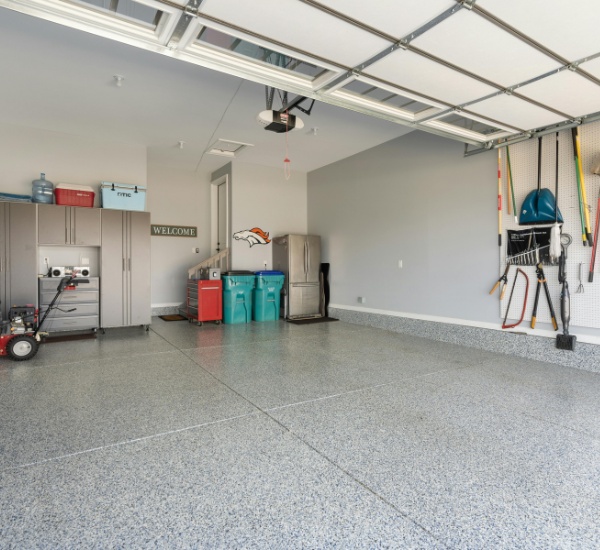
A fresh bottom seal and side weatherstripping cut drafts, dust, and street noise at a fraction of insulation cost, often the first upgrade a storage-heavy garage actually needs.
High-Cycle Family Use and What Wears First
Parts wear in a predictable order under family duty cycles, and knowing the order turns breakdowns into maintenance. Rollers flatten first, announcing themselves as thumps and vibration. Springs surrender next; standard torsion springs carry cycle ratings in the ten-thousand range, and a door logging four to six operations a day reaches that limit in six to eight years, faster with teenagers. Cables fray where they wrap the drums, openers strain against accumulating friction, and sensor brackets drift after years of balls and backpacks clipping them. A once-a-year professional tune-up from our maintenance program catches every stage of that sequence while fixes stay small, and spring replacement, typically $150 to $350, remains planned work rather than a stuck-Saturday discovery. One family's experience captures the rhythm we aim for:
"EM Garage Doors & Gate Services provided us with very functional, quick and efficient services recently. Eddy repaired, did maintenance and installed a new motor for our garage door in a very short time. We find them highly recommendable." — Rebecca Powers, Google Review
Opener features earn their keep on family doors more than anywhere else. A wireless keypad ends the lockout problem when four people share one garage; timer-to-close pulls the door shut when a teenager forgets; battery backup keeps the door usable through the outage that always seems to arrive with a car inside; and app-based monitoring tells you from work whether the door actually closed after the morning rush. None of these are luxuries so much as family logistics, and most integrate with openers families already own. We quote them as line items during any repair or tune-up visit, and we install them with safety sensors and force settings verified, because a convenience feature on a badly adjusted door is just a faster way to wear it out.
North along the coast, our Long Beach page covers the salt-air and density story, and the full coverage list sits on the service areas page. Weekday scheduling runs 8 to 6 across all of it.
Emergency-Type Repairs We Run in Torrance
Torrance emergencies run on the family schedule. The door that stops mid-cycle does it at 7:45 AM with backpacks in the driveway, or at 8 PM with the minivan outside and a garage full of everything a South Torrance family stores. Kid-heavy households are also why we treat sensor calls as urgent: the photo eyes are the one part of the system that exists to stop the door on a child, a dog, or a skateboard left flat on the floor.
The quick-turn list: off-track door repair, spring replacement, safety sensor repair with realignment and wiring checks, and cable repair — which on coastal-air doors we inspect at every visit, because strands hide damage under the jacket. Call (818) 919-0785 on weekdays; we come down from the shop in Reseda and run Torrance with Long Beach and Inglewood on the southern loop.
Torrance Family Garage Questions
Safety, storage, and high-cycle specifics, answered without sales language.
It depends on what you store. Insulation slows temperature swings rather than eliminating them, so it genuinely helps with paint, electronics, canned goods, and woodworking stock, and it quiets the door as a side benefit. If the garage holds only bikes and bins, a well-sealed non-insulated door often makes more sense. We walk the garage with you and give a straight recommendation either way.
Three quick ones. Wave a broomstick across the photo-eye sensors while the door closes; it should reverse immediately. Lay a two-by-four flat under the door and close it; it should rebound on contact. And watch a full open cycle for smooth, even travel without sagging to one side. Any failed test earns a service call before the door gets used again.
Standard torsion springs are typically rated around 10,000 cycles, and a busy family door can log 1,500 cycles a year, which puts spring life in the six-to-eight-year range. Doors opened even more often age faster. Warning signs include visible gaps between coils, a door that feels heavy when lifted manually, and a loud bang from the spring letting go.
Most common repairs land between $150 and $500, spring replacement typically runs $150 to $350, and opener repair usually falls between $100 and $300. Tune-up visits and insulation work are quoted after we see the door, and every job starts with a free written estimate you approve before work begins.
Keep Exploring
More reading for storage-heavy family garages.