
Garage Door Repair for Tarzana's Sun-Baked Ranch Homes
Tarzana's classic Valley ranch houses face their big two-car doors straight into the afternoon sun, and the heat collects its bill year after year. This page covers what sun does to doors, what we replace and retrofit, and what honest repairs cost in this neighborhood.
Tarzana garage door repair deals with the sun. West-facing ranch doors bake every afternoon, springs fatigue faster, and seals crack early. Repairs typically run $150–$500, spring replacement $150–$350, opener repair $100–$300. Free written estimates, Monday through Friday, 8 AM to 6 PM.
Ranch Houses Facing the Afternoon Blaze
Tarzana built out as classic San Fernando Valley ranch country: single-story houses from the 1950s through the 70s, low-pitched roofs, deep setbacks, and wide two-car garages planted proudly front-and-center on the lot. The orientation is no accident — postwar builders faced those garages toward the street, and on most Tarzana streets that means straight into the west and southwest exposure that pours in from lunchtime until dusk.
That geometry turns an ordinary garage door into the hardest-working exterior surface on the house. A metal door in direct Valley sun can run 40 to 60 degrees hotter than the air around it, day after day, for five months of the year. Everything attached to that door ages on an accelerated clock — the paint, the seals, the springs overhead, the electronics in the opener. When we get called to Tarzana, heat is usually somewhere in the diagnosis.
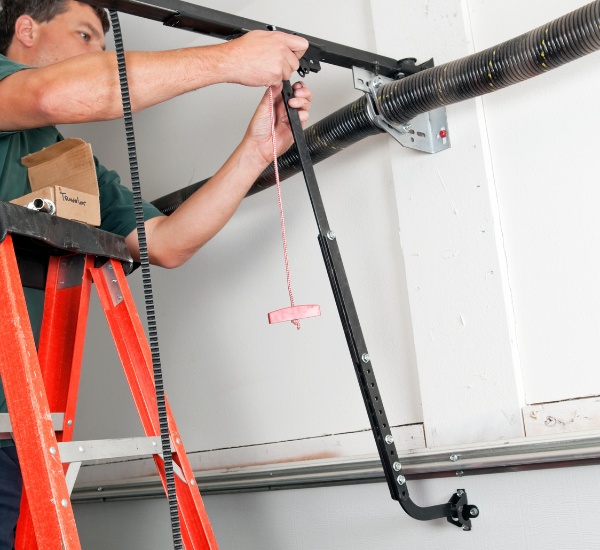
Springs keep the score of every hot cycle
A torsion spring winds and unwinds with each cycle, and Valley heat accelerates the metal fatigue inside the wire. We measure spring tension and door balance on every visit, because a door that has started feeling heavy is usually telling you the springs have begun surrendering before anything snaps.
What Afternoon Sun Actually Does to a Door
The damage shows up in a predictable sequence. Paint and finish go first — chalked, faded, and checking on the rails while the shaded side of the same door still looks fine. Seals follow: the bottom astragal and side weather stripping bake until they harden and crack, which lets in the dust and hot air the garage was supposed to keep out. Steel panels expand and contract daily, working fasteners loose and eventually fatiguing the metal at hinge lines.
The springs age quietly overhead. Heat cycles accelerate wire fatigue, and a spring pair that might have cruised a decade in a milder climate gives out sooner here — usually with the loud bang that Valley homeowners know. When we replace them, we size the new pair to the door's measured weight and cycle rating, and we replace both sides together since the survivor is living on borrowed time. Spring replacement typically runs $150–$350, with the full reasoning on our spring replacement page.
Insulation Retrofits That Earn Their Keep
Most original Tarzana ranch doors are single-layer steel — a pan with nothing inside it, which in August functions as a radiant heater aimed at whatever shares a wall with the garage. Retrofitting insulation changes the room. Foam panels fitted into the sections knock down interior temperatures and quiet the door noticeably, and for garages that double as gyms, offices, or workshops, that comfort converts directly into usable hours.
The honest version of the pitch: insulation pays back fastest on attached garages, west-facing doors, and homes where the AC fights the garage all afternoon. For a detached garage storing boxes, the math is thinner. We measure, walk you through options from retrofit kits to fully insulated replacement doors, and quote real numbers — the decision framework lives on our insulation service page. One caution we always flag: an insulated door weighs more, so springs must be re-matched after any retrofit.
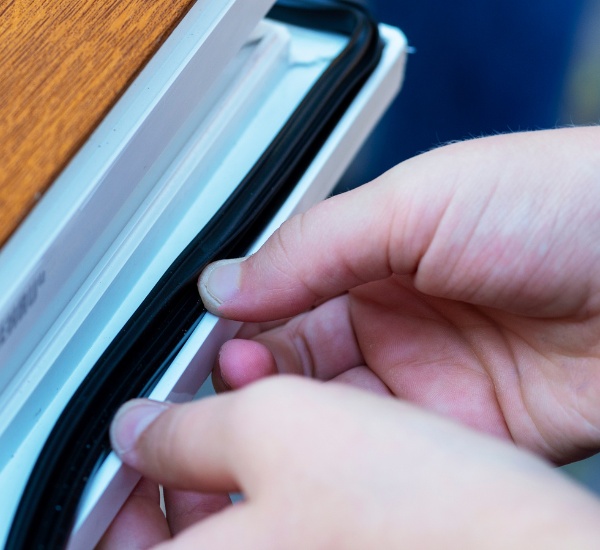
Santa Anas, Dust, and the Bottom Seal
Twice a season the wind reminds Tarzana where it sits. Santa Ana events funnel down the Valley and push fine grit through every gap a garage door has — and a sun-hardened bottom seal is less a barrier than a welcome mat by that point. Homeowners notice it as a film on the garage floor, a smell of dust in the house when the garage shares a wall, and a visible daylight line under the closed door on late afternoons. The fix is small: a fresh seal, side stripping where needed, and a sweep of the track so grit stops grinding the rollers. It is the kind of repair that costs a fraction of the dust damage it prevents, and we check the seal on every visit to a west-facing door whether or not that was the reason for the call.
Spring Cycle Math for Daily Drivers
Tarzana households drive. With two commuters, a school run, and weekend errands, a typical door cycles four to six times a day — call it 1,500 to 2,000 cycles a year. Standard torsion springs are rated around 10,000 cycles, which sounds abundant until you notice the heat discount this climate applies. Do the division and a 1950s ranch on its third or fourth door is often running springs that are years past their design life.
High-cycle spring wire exists for exactly this profile, and we quote it for doors that log heavy daily use. The premium buys longer service intervals and fewer of those 6 AM surprises. Pair it with a tune-up — lubrication, roller check, balance test, opener force settings — and the whole system runs the way it did when the door was new. If the door has simply reached the end, we say that too and quote a replacement honestly.
"When I realized my old garage door was beyond repair, I called EM Garage Doors and Gate Service and they had someone out the next morning to assess and quote—no runaround, just a clear estimate at a fair price… The whole replacement was done in just a few hours." — Armin Arasheben, Google Review
What Tarzana Repairs Typically Cost
General repairs — rollers, cables, track adjustments, seal replacement, sensor fixes — typically run $150–$500. Spring replacement lands between $150 and $350 in most cases. Opener repair runs $100–$300 unless replacement clearly wins. Insulation retrofits and full door replacements are quoted after inspection, because material and model choices swing the number; we discuss LA-typical ranges on site before you decide anything.
Neighborhood context if you are comparing: our Woodland Hills page covers the next stretch of ranch stock west along Ventura, and the Encino page covers the older, leafier blocks east. Every neighborhood we serve is listed on the service areas hub.
Emergency-Type Repairs We Run in Tarzana
Tarzana's emergency season starts with the first real heat wave. West-facing ranch doors take the full afternoon sun, and the springs behind them cook: lubricant thins, steel expands, cycle life drops. The calls come in clusters — a spring that snapped at six in the morning on a 1950s cul-de-sac, a door that came off its track when a dry roller seized mid-cycle, a sensor that quit when sun glare confused its receiver.
The list we run: off-track door repair, spring replacement in heat-appropriate ratings, safety sensor repair including sun-shielding tweaks, and cable repair. If the door has suddenly gotten heavy or loud, stop cycling it and call — those are the two honest warning signs. Weekdays, (818) 919-0785, with the truck coming east from Reseda; Encino and Woodland Hills bracket the same loop.
Tarzana Garage Door FAQ
What sun-country homeowners ask us most.
Most torsion springs are rated for roughly 10,000 cycles, but sustained heat and heavy daily use shorten that. A door that runs four times a day in direct afternoon sun may need springs years before a shaded door does. We rate the remaining life during every visit and show you the measurement.
For a Tarzana garage that faces the afternoon sun, an insulation retrofit often pays for itself in comfort, especially if the garage shares a wall with living space or serves as a workspace. Retrofit kits and insulated door sections vary widely in price, so we measure first and quote options rather than quote a number blind.
Steel expands in heat. A door that fits snugly at 70 degrees can bind at 100 when tracks shift a few millimeters and lubricant thins out. We adjust track alignment, check for rub points, and lubricate with products rated for high temperatures. If the binding comes from a spring that has lost tension, we quote the replacement.
Most spring replacements land between $150 and $350, matching our published Los Angeles range. The final number depends on spring wire size, whether one or both springs are replaced, and the measured weight of the door. Every quote is written and approved by you before work starts.
Keep Exploring
Nearby coverage and related services.