
Garage Door Closes Then Reopens? Here's Why
The door travels down, kisses the floor, and pops right back open. Reversing like this almost always means the photo-eye sensors, the force settings, or the track is telling the opener the door hit something. All three are diagnosable.
When a garage door reaches the floor and pops back open, misaligned or dirty photo-eye sensors are the cause in most cases. Tight opener force settings and a binding track account for the rest. Clean both sensor lenses, realign them until their LEDs hold steady, then test a full cycle.
The door travels down, touches the floor, and immediately climbs back up. You press the button again; same result. A garage door that closes then reopens isn't broken — it's doing exactly what its safety system tells it to. Something is convincing the opener the door hit an obstacle, and until that signal clears, the door keeps reversing.
Reversing calls are among our most common repairs from Northridge to Granada Hills, and the cause shakes out nearly every time: sensors first, force settings second, track bind third.
Why Openers Reverse Instead of Closing
Every opener made in the last three decades has two independent safety systems. The photo-eye sensors — two small units a few inches off the floor on either side of the opening — watch for anything crossing the beam while the door descends. The force system measures how hard the motor works; if the door meets more resistance than expected, the opener assumes a child or pet is underneath and backs up.
A door that reverses is those systems doing their jobs with bad information. Your job is finding which signal is lying.
Cause 1: Photo-Eye Sensors (Most Common)
When a door reverses before or as it reaches the floor, sensors are the first suspect. The eyes must face each other precisely; a beam broken by dust, a spiderweb, or a knock from a trash can tells the opener the doorway is obstructed. Check the indicator LED on each unit: both should glow steady, and one flickering or dark means that side can't see the other.
Wipe both lenses with a soft dry cloth, loosen the wing nut on the misbehaving side, rotate slowly until both lights hold steady, then retighten. That ninety-second fix resolves most reversing doors we see. If a light stays dark no matter what, the sensor or its wiring has failed — our sensor repair service replaces them as a matched pair, usually in one visit.
Cause 2: Force Settings
If the sensors check out, the opener's force adjustment is next. Openers learn how much force a door needs; when the door gets heavier — worn springs, waterlogged panels, debris in the tracks — the motor reads the extra strain as a collision and reverses. On some openers the door still reaches the floor and bounces back; on others it reverses a foot up.
Force settings are adjustable through the opener's controls, but treat them with respect: cranking the force up to muscle past a mechanical problem disables the safety margin the setting protects. If the door only got heavy, the underlying issue — usually tired springs — needs attention, not a stronger shove. Our opener repair service handles force calibration correctly, and spring replacement is what actually returns the door to normal weight.
Cause 3: Track Bind
The third cause is physical: a spot in the travel where the door drags. A slightly bent track section, a roller pinching at a seam, or a loose bracket creates real resistance at the same height every cycle. The opener feels the bind, decides it's an obstacle, and reverses. The tell is consistency — reversing at the same spot every time points away from sensors (which block the whole closing run) and toward hardware.
Bind is a technician job. The door must be secured and, near the springs or cables, relieved of tension before anyone works the track. Our track repair service handles straightening and bracket re-anchoring; our bent track repair guide covers the straighten-or-replace call in detail.
Here is the short version, in table form:
| What the door does | Likely cause | What to do |
|---|---|---|
| Reverses anywhere during closing, opener light flashes | Sensors blocked or misaligned | Clean lenses, realign until LEDs are steady |
| Touches floor, then pops back up | Closing (down) travel or force setting off | Professional adjustment of limits and force |
| Reverses at the same spot every time | Track bind or roller pinch | Stop cycling; schedule track repair |
| Reverses only in late afternoon sun | Direct sun washing out the sensor beam | Reposition sensor brackets or add a sun shade |
| Reverses with one specific car parked inside | Beam clipped by bumper or cargo | Repark a foot deeper or shallower |
The Two-Minute Sensor Check
- Look at both sensor LEDs. Steady and matching is a pass; flickering or dark is a fail.
- Wipe both lenses with a soft dry cloth — Valley dust films them quickly in summer.
- Loosen the wing nut on the failing side and rotate until both lights hold steady.
- Run a full close. If the door stays down, you're done.
- If one light stays dark, stop — that's wiring or a dead sensor, not alignment.
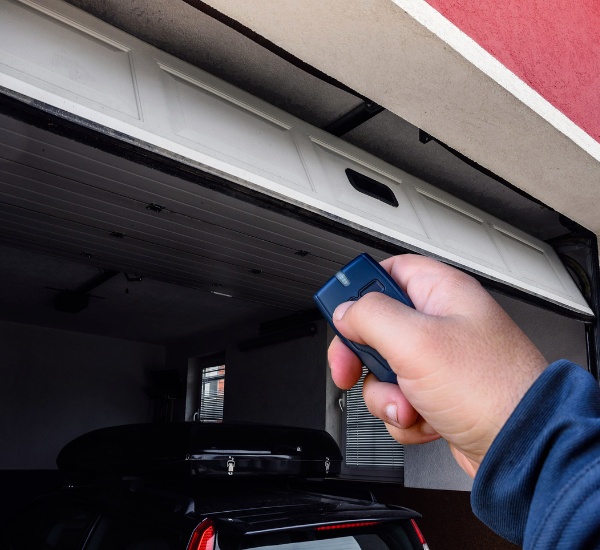
Late-afternoon reversals
One pattern worth knowing: doors that only reverse in the late afternoon often face west — low sun over the Valley can wash out the sensor beam right at golden hour. If the door behaves all morning but refuses at 5 PM, sun, not a fault, is the trigger; deepening the brackets or adding a shade sleeve fixes it. The same logic applies when a specific car parks exactly where it clips the beam. Our full sensor repair guide covers these edge cases.
When to Stop and Call a Pro
Cleaning lenses and realigning sensors is safe for anyone. Adjusting force settings is not — an over-tight setting is a genuine hazard for kids and pets — and a binding track involves tensioned hardware that must never be worked loose by hand. Draw the line there: if the two-minute sensor check doesn't settle it, the door needs a technician.
One warning we give every year: never bypass, tape over, or zip-tie the safety eyes to force a door closed. It disables the protection that has safeguarded children and pets since openers adopted it, and it shifts the liability onto you. Our Los Angeles garage door repair visits sort reversing doors with the safety systems intact — free estimate first.
"The price was reasonable." — Bob Serna, Google Review
What We See Most Often on Reversing Calls
Across Encino, Van Nuys, and the streets around our Reseda shop, the ratio holds: most reversing doors are fixed at the sensors, a minority need force calibration, a handful hide a bent track. Whichever bucket yours is in, a door that won't stay closed isn't secure. Call (818) 919-0785 Monday through Friday, 8 AM to 6 PM, and we'll pin it down with a free estimate.
Reversing Garage Door FAQs
Answers to the questions we hear most about doors that close and reopen.
The opener's safety system thinks the door hit something. In most cases the photo-eye sensors are misaligned or dirty; after that, the force settings are too tight for the door's current weight, or the track binds at one spot. Cleaning and realigning the sensors resolves the majority of cases.
We don't recommend it. The force setting is a safety limit — turning it up to overpower a heavy door removes the protection the setting provides. If the door has gotten heavier, the real problem is usually worn springs or track drag, and masking it with force risks damage and injury. Have a technician calibrate it.
Intermittent reversals usually mean an intermittent beam break: a spiderweb that rebuilds, low sun at certain hours, a car parked just inside the beam line, or a loose sensor bracket. Track when it happens — time of day and what's parked inside — and the pattern names the cause.
Never. Taping, tying, or removing the safety eyes disables the protection required on every modern opener, and it makes you responsible if anything is struck. If a sensor has failed, the correct fix is replacing the pair — usually a quick, inexpensive repair.
Sensor realignment is often handled in a short call at the low end of the typical $150 to $500 repair range; sensor replacement and force calibration sit in the middle; track work depends on the damage. We diagnose on site and quote before work starts.
Indirectly, yes. Worn springs make the door heavier than the opener expects, and the extra strain can read as an obstruction. If the door also feels heavy lifted by hand or sags when halfway open, springs are likely involved and should be inspected before anything is adjusted.
Keep Reading
More guides from the EM Garage Doors team.