
Post-Earthquake Garage Door Safety Checklist for Los Angeles
After any quake you can feel, give the garage door 15 minutes: one watched cycle, a track and bracket inspection, an eyes-only spring check, and a re-test of the opener’s safety reverse. Here is the full checklist, and the signs that mean stop and call a pro.
After any noticeable quake, run the door through one full cycle, check tracks for bends and shifted brackets, inspect springs and cables visually, and re-test the opener’s auto-reverse. If the door binds, sits crooked, or a spring looks damaged, stop using it and call a professional.
In Los Angeles, the question after an earthquake is never if you should check the garage door — it's how carefully. The door is the largest moving object attached to your house, and shaking that rattles dishes in Encino has enough force to shift track brackets, knock a torsion assembly sideways, or crack the framing an opener hangs from. A door that worked fine before the quake can fail on its next full cycle.
I'm Eddie, owner and lead technician at EM Garage Doors in Reseda. The 1994 Northridge earthquake (magnitude 6.7) is still the reference point for anyone who worked Valley garages back then: jammed doors with cars trapped inside were a recurring aftermath story, and a lot of that damage was hardware that had quietly loosened for years. Here is the 15-minute checklist we'd run after any quake you can feel, and the signs that mean stop and call a pro.
First Five Minutes: Before You Cycle the Door
Do a visual pass before pressing anything. Look for obvious damage: a door sitting crooked in the opening, gaps between rollers and track, debris on the rails, springs hanging differently than usual. Keep people and cars out of the door's path for the first test. Then run one full open-close cycle while watching and listening. Grinding, popping, catching, or hesitation all mean stop — don't run the door again hoping it clears.
| Check | What you’re looking for | What it means |
|---|---|---|
| Full cycle test | Binds, pops, grinding, hesitation | Misalignment or debris — inspect before using again |
| Track alignment | Gaps between rollers and rail, bent sections, shifted brackets | Track damage; forcing it risks going off-track |
| Mounting hardware | Loose or backed-out lag screws, cracked brackets | Shaken fasteners need retorquing or replacement |
| Springs and torsion shaft | Gaps in coils, shifted cones, shaft knocked off its bearings | Suspected spring damage — hands off, call a pro |
| Cables and drums | Slack cables, cable off the drum, fraying | The lift system has lost integrity — professional repair |
| Door square when closed | One side higher, uneven reveal at the floor | The assembly is out of square or a section is damaged |
| Opener rail and jamb bracket | Bracket pulling from the wall, rail bent, loose bolts | Opener mounting compromised — repair before use |
| Auto-reverse and force | Door fails the lumber test or reverses oddly | Opener settings shifted; have them reset professionally |
Track Alignment: The Most Common Quake Casualty
Tracks take earthquake forces from two directions at once: the house frame pushes one way while the door's weight loads the other. A bracket that moves even a fraction of an inch changes how rollers seat, and a door that "mostly works" on a shifted track is quietly chewing hardware every cycle. Sight down each track for bends or bows, and watch the rollers through a full cycle — they should stay centered, not climb toward the track's edge. Small bracket shifts are adjustable; bent rail sections are replaceable, and our bent garage door track repair guide covers the decision in detail.
Springs and Cables: Eyes Only
Look, don't touch — this rule never changes. Check the torsion springs for any new gap between coils (a two-to-three inch gap means a break), confirm the spring cones and shaft haven't slid off their bearings, and verify both lift cables sit neatly in their drum grooves without slack or frays. If anything looks wrong, close the door gently if it will close, stop cycling it, and call a technician. Spring and cable systems hold enough stored energy to cause severe injury, quake or no quake.
Re-Test the Opener’s Force and Auto-Reverse
An earthquake can shift more than metal; it can shift settings. Opener force and travel limits that were calibrated before the quake may now be wrong for a door that sits slightly differently in its tracks. Two tests confirm it: lay a flat piece of lumber on the floor and close the door — it should reverse on contact — and sweep a broom across the photo-eye beam near the floor during closing — it should reverse instantly. A door that strains, hesitates, or fails either test needs its opener settings reset before regular use.
The Wall Bracket and Reinforcement
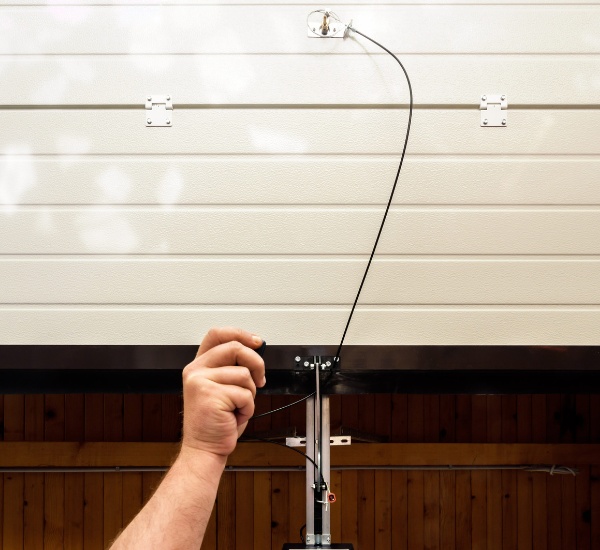
Every opener hangs from a bracket at the door header and pushes against the door itself, and in many older Valley garages that bracket is held by a single lag screw into framing that has been drying out since the Nixon administration. After a quake, check for a bracket pulling away from the wall, cracked wood around the fasteners, or a rail that flexes visibly when the door starts moving. Reinforcing the header bracket and adding a strut across the top section are inexpensive fixes that make the whole system far more quake-tolerant.
When to Stop and Call a Professional
Stop and call if the door binds at any point, sits visibly crooked, has known spring or cable damage, has rollers that climbed out of the track, or has an opener bracket tearing loose. Forcing a jammed door bends more hardware and can turn a track adjustment into a full off-track repair. Our garage door maintenance service in Los Angeles covers post-earthquake inspections — especially relevant for Northridge and surrounding Valley homes carrying pre-1994 hardware — and the annual tune-up in our maintenance checklist keeps brackets torqued and settings calibrated so the next quake has less to grab.
"The price was reasonable." — Bob Serna, Google Review
That short line from Bob Serna's July 2026 review is the fragment Eddie's reply thanked him for highlighting, and it's the line we care about most on inspection calls, where homeowners are worried about being oversold. Every estimate is free, itemized, and approved by you before any work begins.
Felt a quake? Call (818) 919-0785, Monday through Friday, 8 AM to 6 PM. We'll run the full inspection and tell you plainly what's cosmetic, what needs fixing, and what can wait.
Frequently Asked Questions
Answers to the earthquake questions LA homeowners ask most.
After any quake you can feel, yes. The check is quick: one watched full cycle, a look at tracks, brackets, springs, and cables, and a re-test of the auto-reverse. Even mild shaking can shift brackets enough to put a door off its track on the next cycle.
It can. Shaking shifts the torsion shaft and cones and loads springs unevenly, which can finish off a spring that was already near the end of its cycle life. Look for a gap between coils or a shifted cone. If you see either, stop using the door and call a technician.
Sight down each track for bends or bows, check that mounting brackets have not shifted or loosened, and watch the rollers through a full cycle — they should stay centered in the rail without climbing toward its edge. Gaps between roller and rail are the classic sign of a shifted track.
No. Binding means something is misaligned or damaged, and forcing the door can bend tracks, pull cables off their drums, or throw the door off-track entirely. Stop cycling it and have it inspected before using it again.
The 1994 magnitude 6.7 Northridge earthquake left many Valley homes with jammed garage doors and trapped cars, mostly from brackets, tracks, and openers mounted on aging framing. The lesson: keep hardware torqued and the system aligned so the next quake has less to grab.
Call if the door binds or sits crooked, if any spring or cable looks damaged, if rollers have climbed out of the track, if the opener bracket is pulling loose, or if the door fails the auto-reverse test. A professional inspection also makes sense after any major quake, even when everything looks fine.
Keep Reading
More guides from the EM Garage Doors team.