
Garage Door Spring Replacement: Signs, Costs, and Safety
Springs are the muscle behind every garage door, and every spring eventually wears out. This guide covers how they fail, what replacement involves, and what Los Angeles homeowners should expect to pay.
Garage door springs last about 7 to 10 years, or roughly 10,000 cycles. Replacing them is genuinely dangerous as a DIY job because the springs store serious energy. Professional replacement in Los Angeles typically costs $150 to $350.
A garage door weighs 150 to 300 pounds, yet most openers lift it with a motor smaller than a kitchen blender's. The trick is the springs. Garage door spring replacement is the single most common major repair we perform across the San Fernando Valley, from Woodland Hills to Northridge, because every door depends on springs and every spring has a countdown clock on it.
Here is how springs work, how to know when yours are done, and why this is the one repair you should never attempt yourself.
What Garage Door Spring Replacement Involves
Springs form a counterweight system. The opener doesn't lift the door; it just moves a door that the springs have already balanced. When you raise the door halfway and let go, a healthy system holds it there. When a spring breaks, the door suddenly weighs its full amount, the opener strains or refuses, and the whole system stops.
Replacement means removing the old springs, winding new ones to the exact tension your door's weight requires, and testing the balance. It is precise work with a simple rule: wrong tension equals a door that slams, drags, or burns out the opener.
Torsion vs Extension Springs
Most homes have one of two systems. Knowing which one you have makes any conversation with a technician shorter — and if you are not sure what is sitting above your door, our torsion vs extension springs guide shows you how to tell in about a minute.
| Feature | Torsion springs | Extension springs |
|---|---|---|
| Location | Horizontal shaft above the door | Parallel to the horizontal tracks, both sides |
| Typical homes | Most doors built after the 1980s | Older homes, lighter doors |
| Balance quality | Smoother, more even | Adequate, can feel jerky |
| Failure mode | Loud bang, visible gap in coil | Sagging door halves, slack cables |
| Lifespan | ~10,000 cycles standard | ~10,000 cycles standard |
Extension springs stretch along the tracks and are under tension even at rest, which is why safety cables run through them. Torsion springs torque around a shaft. Both store enough energy to cause severe injury when they release unexpectedly.
Four signs it's time for new springs
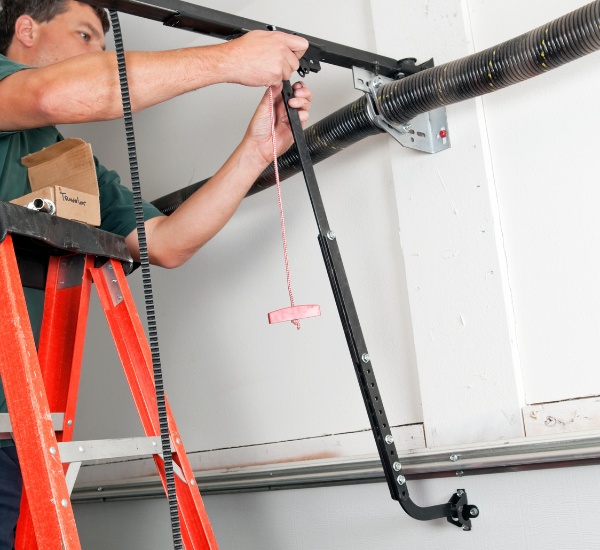
1. A gap in the coil. A healthy torsion spring is a continuous coil. A two to three inch gap means it snapped. 2. A loud bang from the garage. Springs fail suddenly, and the sound is unmistakable. 3. A crooked or jerky lift. With one spring dead, the door rises unevenly or stops after a few inches. 4. The door is 7 or more years old. If your neighbors in Reseda or Encino are on their second set of springs and you're still on your first, age alone justifies an inspection.
The Cycle Math: How Long Springs Actually Last
Spring life is measured in cycles, not years. One cycle is one full open and close. Standard springs are rated for about 10,000 cycles. Do the math for a typical household: two round trips a day means four cycles daily, roughly 1,460 a year, which puts a standard spring at about seven years. A single person using the door twice a day logs around 730 cycles a year and could see 13 or more years. A big family running five cycles a day burns through the rating in five to six years.
Valley heat shortens those numbers further. A garage in Van Nuys that hits 110 degrees inside every August dries out lubricant and fatigues metal faster than a coastal garage in Santa Monica ever sees.
Two habits stretch spring life further. Lubricating the springs and other moving parts once or twice a year reduces the metal-on-metal wear that eats cycles, and it takes minutes. And a quick balance test, done with the opener disconnected, tells you whether the springs are still doing their share: a door that sags or races upward under its own weight is announcing that the counterweight system needs attention before it fails outright.
Why You Should Never DIY Spring Replacement
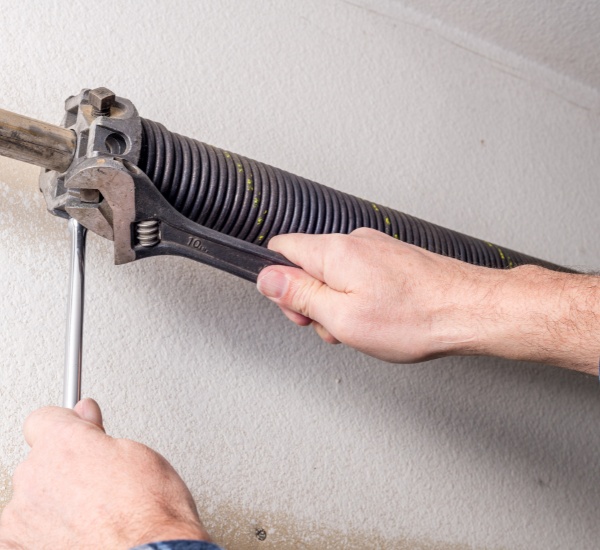
A wound torsion spring stores enough energy to launch a winding bar across the garage. Injury data from the U.S. Consumer Product Safety Commission (cpsc.gov) and the safety guidance published by the Door & Access Systems Manufacturers Association (dasma.org) consistently show that spring and cable work accounts for a large share of serious garage door injuries each year, and those injuries tend to happen to capable DIYers, not careless ones. The bar slips, the spring releases, and the result can be broken bones or worse.
There is no version of this repair that rewards improvisation. The tools, the technique, and the tensioning all have to be right. A door that's misbalanced after a DIY attempt also destroys openers, which turns a $200 repair into a much larger bill.
There's a financial argument on top of the safety one. Professional replacement comes with springs matched to the door, correct winding, and a warranty on the work. A DIY attempt that leaves the door slightly out of balance voids that safety net, quietly transfers the door's full weight to the opener, and usually shortens the opener's life by years.
What Professional Replacement Includes, and What It Costs
Our spring replacement service in Los Angeles includes removing the old springs, installing new ones matched to your door's weight and size, safety-testing the full cycle, and a balance check so the opener isn't fighting a lopsided door. Most jobs are finished within a single visit.
Preparing takes five minutes. Clear the area around the door, park outside if the garage is your only parking, and make sure the wall outlet is reachable. If the door is stuck open, secure the opening as best you can and say so on the phone; a door held up by a broken spring can drop without warning. Keep kids and pets clear of the work area on the day, since the door gets cycled repeatedly during tensioning and testing.
Cost typically runs $150 to $350 for residential doors in LA. Three factors move the number: door weight and size (a heavy solid-wood door needs heavier springs), spring type, and cycle rating. High-cycle springs rated for 20,000 cycles cost more up front and usually outlast the rest of the door. For a deeper breakdown of where every repair dollar goes, see our Los Angeles pricing guide.
"Highly Recommended!! The repair guy arrived 1 hour early for a quote but actually replaced the motor before our scheduled appointment." — Evan Bowden, Google Review
One related note: a broken spring is the most common reason a garage door won't open at all. If you heard a bang and the door is stuck, keep it closed and leave the opener alone until a technician arrives.
Suspect your springs are worn or already snapped? Call (818) 919-0785 Monday through Friday, 8 AM to 6 PM, or request a free estimate online. We'll confirm the diagnosis on site and quote the full job before starting.
Frequently Asked Questions
Answers to the spring questions Los Angeles homeowners ask most.
Usually yes. When a door has two springs, they were installed together and have worn together. The second spring is often close behind the first. Replacing both at once saves a second service call and keeps the door balanced, which protects the opener from uneven strain.
Professional spring replacement in Los Angeles typically costs $150 to $350 for most residential doors. The final price depends on the spring type, door weight and size, and whether you upgrade to high-cycle springs. We provide a free, itemized on-site quote before any work begins.
Standard torsion springs last about 10,000 cycles, roughly 7 to 10 years for a typical household. A cycle is one full open and close. High-cycle springs rated for 20,000 cycles can last twice as long. Hot Valley garages and heavy daily use shorten spring life.
For most LA homeowners, yes. High-cycle springs cost somewhat more up front but are rated for roughly twice the cycles, which often means the last spring purchase you make for the door. Households that use the garage door as the main entrance benefit most.
Partly. Lubricating the coils once or twice a year reduces metal-on-metal wear, and a periodic balance test catches a weakening spring before it snaps. But the cycle count is fixed at manufacture — a standard spring is rated for roughly 10,000 open-close cycles, and heavy daily use plus Valley heat spends that budget faster.
Usually, yes. Lift cables fray on nearly the same schedule as springs and ride on the same drums, so replacing them together avoids paying for a second visit when a cable fails a year later. Most technicians quote springs and cables as a pair for exactly that reason.
Keep Reading
More repair guides from the EM Garage Doors team.