
Garage Door Keypad Not Working? Six Fixes to Try First
A step-by-step diagnostic ladder for a dead exterior keypad, from the battery that fixes most cases to the rare opener-board fault. Written for LA homeowners who want to try the safe fixes before calling us.
A garage door keypad that stops working usually comes down to a dead battery, lost programming, or worn buttons. Replace the battery first, reprogram the PIN using the opener's learn button, then check for stuck keys and sun damage to the housing. Only replace the unit after those steps fail.
You punch in your code, the keypad light flickers or stays dark, and the door does not move. A garage door keypad not working is one of the most common calls we take across the San Fernando Valley — and one of the most misdiagnosed. Homeowners fear the whole opener is failing when the fix is often a battery that costs a few dollars.
This guide walks the same ladder our technicians use, starting with the fix that works most often and ending with the rare problems that need a professional. Work through the steps in order and you will not replace parts that still work.
Garage Door Keypad Not Working? Fix It in This Order
Keypads fail for six main reasons. Each step below takes minutes and costs little or nothing.
Step 1: Replace the Battery First
Wireless keypads run on a 9-volt or AA battery that lasts one to two years. LA heat cooks batteries faster, especially keypads bolted to west-facing frames in Reseda and Woodland Hills that bake every afternoon. Symptoms of a dying battery are telling: dim or flickering backlight, keys that only respond to a hard press, and a keypad that works at night but struggles after a hot day. Swap the battery before touching anything else. This single step fixes the majority of dead keypads we see.
Step 2: Reprogram the PIN
Power outages and surges can wipe a keypad's programming even when the battery is fine. Reprogramming pairs the keypad to the opener again. The generic sequence works on most LiftMaster, Chamberlain, and Genie units: find the learn button on the opener motor (usually near the antenna wire, sometimes behind the light cover), press and release it, then within 30 seconds enter your new PIN on the keypad and press enter. The opener lights blink or click to confirm. Exact steps vary by brand and model year, so keep your opener manual handy or find it online by model number.
Step 3: Free Stuck or Worn Buttons
Press every key, one at a time. A key that clicks but registers nothing, or one that stays depressed, points to a worn membrane under the pad. Dust and sunscreen oils work into the seams over the years. Cleaning around the keys with a dry toothbrush sometimes restores marginal buttons, but a membrane that has cracked inside the housing means the keypad is finished — no amount of cleaning brings it back.
Step 4: Check for Sun and Weather Damage
Ultraviolet sun is brutal on outdoor plastic, and Los Angeles delivers it year-round. UV yellows the cover, brittles the housing, and warps the button membrane; heat cycling does the rest. South- and west-facing keypads fail years before shaded ones. If the cover is crazed with hairline cracks or the print has faded off the keys, the unit has taken all the sun it can. Replacing it with a UV-resistant housing and mounting it in the door frame's shade, where possible, extends the next one's life.
Step 5: Inspect the Wiring at the Opener
Wired keypads — common on older openers and commercial doors — connect to terminals on the opener rail or wall console. A gentle tug test at the keypad and a visual check of the terminals will find loose or corroded connections. Look for nicks in the low-voltage wire too; rodents chew it. Corroded terminals can be cleaned with a pencil eraser and re-tightened with a screwdriver. If the wire itself is damaged between keypad and opener, it needs to be run again.
Step 6: Replace the Keypad
If a fresh battery and a reprogram both fail and the buttons are worn or sun-damaged, replace the unit. Brand-matched keypads pair more reliably than universals, and installation is a low-cost part plus a few minutes of programming. Our remote and keypad replacement service carries common units for the opener brands we service and pairs them to your opener on the spot, so most replacements happen in a single visit.
When the Keypad Is Not the Real Problem
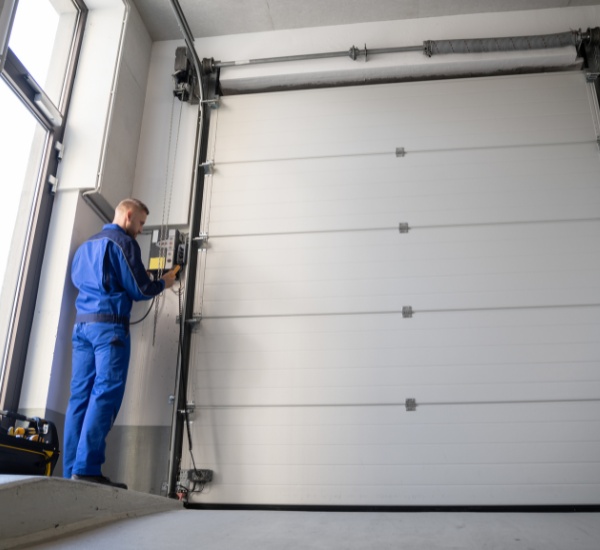
Here is the test that saves people the most money: try a handheld remote. If the remote opens the door but the keypad does not, the keypad is the fault. If both are dead, the keypad is innocent and the problem sits at the opener — usually the radio receiver or logic board, occasionally a lock or vacation mode accidentally switched on at the wall console.
Receiver and board failures are rare, but they do happen after power surges, which our grid serves up regularly. That repair is not a DIY job; it involves opener diagnostics and matched parts. Start with our guide to a garage door remote not working to separate remote, keypad, and opener symptoms before you spend anything. And if the opener flashes a light pattern while refusing to respond, our LiftMaster error codes explained guide decodes what the blinks mean.
Upgrade Path: Modern Wireless Keypads
If your keypad is due for replacement anyway, the current generation is a real step up. Backlit keys make nighttime entry easy, weather-sealed housings shrug off irrigation spray, and rolling-code security changes the transmitted code after every use — so a code captured with a scanner is worthless the second time. Many newer keypads also support temporary PINs, which is handy for dog walkers, contractors, and houseguests you do not want to hand a permanent code. If you want remote monitoring and phone control on top of a keypad, our smart garage door opener installations cover the units that do both.
While you are reprogramming, spend a minute on PIN hygiene. Avoid birth years and house numbers — the two codes a stranger can guess from the curb. A random four to six digit code costs you nothing to memorize and defeats the casual thief entirely. And if you share a code with a contractor or sitter, delete it when the work ends; temporary PINs exist precisely so you never have to trust someone forever.
Most keypad fixes take under an hour, and many take five minutes. If you have worked the ladder and the door still ignores your code, that is the point where a second pair of eyes pays for itself. We diagnose keypad, remote, and receiver faults across Los Angeles and quote before any work begins.
"Had a great experience with Eddie. He responded quickly. He made himself available quickly and successfully completed our project. He seems nice, genuine and competitively priced. We are using him again very soon." — Michelle Moore, Google Review
Ready for a hand? Call (818) 919-0785 or reach us through the contact page and describe what the keypad does — lights, sounds, and which steps you have tried. That detail usually tells us the answer before we arrive.
Garage Door Keypad FAQ
Common keypad questions from our Los Angeles service calls.
The most common cause is a dead battery, followed by lost programming after a power outage and worn or stuck buttons. Replace the battery first, then reprogram the PIN using the learn button on the opener before assuming the keypad itself has failed.
Press and release the learn button on the opener motor, then within 30 seconds enter your new PIN on the keypad and press enter. The opener lights blink to confirm the pairing. Exact steps vary slightly by brand and year, so check the opener manual for your model.
Most wireless keypads last 5 to 10 years. Direct Los Angeles sun yellows the plastic and wears the buttons faster, especially on south- and west-facing garages. A keypad that fades, crackles, or only responds to hard presses is due for replacement.
Yes. We diagnose keypad, remote, and opener problems across Los Angeles and carry common replacement keypads on the truck. If the keypad is not the real culprit, we find the underlying issue and quote the fix before any work begins.
A replacement keypad is a low-cost part plus a few minutes of programming — a fraction of any opener repair. Brand-matched keypads pair more reliably than universals, and we supply and program them for the opener brands we service in a single visit, with the price approved before work starts.
Usually, yes. Most openers from the early 1990s onward have a learn button or Security+ style programming that accepts current universal and brand keypads. Much older fixed-code units can need a specific model or a receiver upgrade. Bring the opener brand and model number, or a photo of the motor head, and we will match the right keypad to it.
Keep Reading
More troubleshooting guides for garage door entry problems.