
Is Garage Door Insulation Worth It in Los Angeles?
An honest look at garage door insulation for LA homes: how much cooler your garage actually gets, what it does to energy bills, and when to skip it. Written for homeowners from the San Fernando Valley to the Westside.
For an attached garage in the San Fernando Valley, usually yes. Insulation cuts heat soak, eases the load on your AC, and makes the door quieter. A detached or rarely used garage benefits far less. Think comfort and quiet first, with modest energy savings on top.
In a Woodland Hills August, the air inside an uninsulated garage can pass 110 degrees while your air conditioner fights the heat radiating through the shared wall. If that sounds familiar, you have probably asked whether garage door insulation is worth it. This page gives you the honest Los Angeles answer: when it clearly pays, when it does not, and what the numbers actually look like. For the broader summer fight — shade, ventilation, and prep before a heat wave — our San Fernando Valley heat wave prep guide picks up where the door leaves off.
An attached garage is the thermal weak point of most LA homes. Builders insulate the walls and the attic but leave the biggest surface — the door — as a single sheet of steel. On a 95-degree Valley afternoon, that sheet becomes a radiator aimed at whatever sits on the other side of it.
How Garage Heat Moves Into Your Home
Heat travels by conduction, convection, and radiation, and an uninsulated door uses all three. Sunlight heats the outer steel skin, conduction carries that heat through the panel, and the hot garage air rises and collects at the ceiling. From there it soaks into any room above the garage or sharing a wall with it.
That is why the bedroom over the garage is the hottest room in a Northridge or Reseda house in July, and why the floor above the garage stays cold in January. The garage acts as a buffer you cannot switch off. Insulation slows that entire chain of transfer instead of patching one link.
Orientation matters too. A door that faces west absorbs the full afternoon sun during the hottest hours of the day, while a north-facing door barely warms. If your driveway bakes at 5 p.m. in Woodland Hills, Tarzana, or Reseda, you live in the group that sees the biggest change from insulating.
The Benefits of Insulating Your Garage Door
- A cooler garage. Many homeowners report garages running 10 to 15 degrees Fahrenheit cooler on hot days after insulating. Exact results vary with door size, sun orientation, and ventilation.
- Less strain on your AC. When the room above the garage stops absorbing heat all afternoon, your air conditioner runs less to hold temperature. The effect shows up as comfort first and a modest dip in usage second.
- A quieter door. Insulated panels are stiffer and heavier, so they rattle less in the wind and transmit less motor noise into the house.
- A sturdier door. Insulated sections are thicker and resist dents better than a single steel sheet — a real advantage on a street where basketballs and car doors keep finding the panels.
- Healthier storage. Paint, electronics, and anything with a battery prefers a garage with smaller temperature swings.
Sealing Matters as Much as Insulation
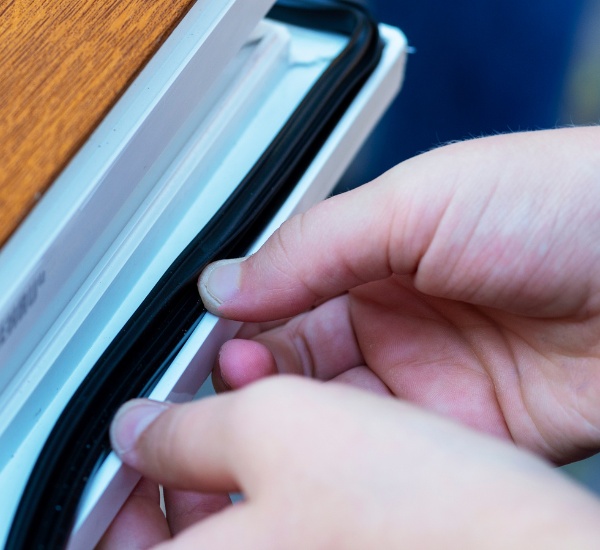
Insulation slows heat through the door; weather stripping stops it around the edges. Check the bottom seal, the side seals, and the threshold together. An insulated door with a shredded bottom seal still pulls in hot outside air all afternoon, so we treat sealing as part of every insulation job.
Seals are also the cheaper half of the project. If the budget only stretches to one fix this season, start with the seals and insulate next.
Is Garage Door Insulation Worth It? The Honest Math
Here is the part most articles gloss over. A DIY retrofit insulation kit for a single-car door typically runs $50 to $150 in materials and an afternoon of work. A professional retrofit — kit, labor, and rebalancing the door — costs more, and a new insulated door installed lands well beyond that. Energy savings alone rarely pay that back quickly, because insulation mostly conditions the garage, not the house.
The payback looks different when you count everything. The math works best when the garage is attached, when a bedroom or living space shares the garage wall or ceiling, when you actually spend time in the garage, and when the door needs work anyway. Stack comfort, quiet, and storage protection alongside the energy line, and an attached-garage home in the Valley usually comes out ahead. A detached garage almost never does.
Where you live inside LA changes the answer, too. A Sherman Oaks home with a bedroom over the garage recovers the cost in comfort within the first summer. The same kit on a Santa Monica garage with ocean breeze and no shared walls may never pay for itself. The honest rule: the more time people or rooms spend next to the garage, the better insulation pays.
R-Values, Explained Quickly
R-value measures resistance to heat flow — higher numbers slow heat better. A single-layer steel door sits near zero. Doors with polystyrene insulation commonly land around R-6 to R-9, and polyurethane sandwich construction can reach R-12 to R-18. For LA purposes, R-6 to R-10 handles coastal zones, while Valley homes with occupied space near the garage benefit from the higher tier.
One caution about shopping by numbers alone: an R-18 door installed with gaps at the sides and a worn bottom seal performs worse than an R-9 door sealed tight. Installation quality and weather stripping can matter more than the rating printed on the brochure, which is why we treat sealing as part of the job rather than an upsell.
When Insulation Is Not Worth It
Skip it when the garage is detached and used for storage you rarely visit — insulating a shed with a car in it buys little. Skip it when the door itself is failing, too: foam panels inside a door with worn rollers, tired springs, and bent tracks means paying to insulate a problem. Fix the door first through our garage door repair service, then decide. Coastal homeowners in Santa Monica or Marina del Rey, where ocean air keeps temperatures tame, also see less benefit than Valley neighbors.
Retrofit Kit vs. a New Insulated Door
A retrofit kit adds foam or reflective panels to the inside of your existing steel sections. It is the budget move, and it genuinely cuts heat and noise. Two cautions: the panels add weight, so the springs and opener may need adjustment to keep the door balanced, and a kit cannot rescue a door that is already worn out.
A new insulated door installs proper polyurethane construction, fresh hardware, new weather sealing, and springs matched to the door's weight. If your door is 20 years old or has damage, the new-door route usually makes more sense. Our garage door insulation service handles retrofits and rebalancing, and our new garage door cost guide breaks down full replacement pricing for Los Angeles.
Installation day for a retrofit is short. The inside of each section gets cleaned, panels are cut and fitted to the actual opening, and the door is rebalanced so the opener is not straining against the new weight. Most single-door retrofits are finished in a single visit, with the balance tested before we leave.
Garage Door Insulation FAQs
Answers to the questions LA homeowners ask most about insulating garage doors.
Many homeowners report a garage 10 to 15 degrees Fahrenheit cooler on hot days after insulating, though results vary with door size, orientation, and ventilation. An insulated door also slows the heat that radiates into rooms sharing a wall or ceiling with the garage.
It can help, but modestly. Insulation reduces heat soak into adjacent rooms, which eases the load on your air conditioning, but a garage door is only one part of your home's thermal envelope. Buy it for comfort and quiet first, and treat energy savings as a bonus.
Yes. Retrofit insulation kits add rigid foam or reflective panels to the inside of existing steel door sections. The added weight is small but real, so the springs and opener may need adjustment afterward. Our technicians handle the full job, including rebalancing the door.
For coastal areas like Santa Monica, a moderate R-value around 6 to 10 is usually enough. In the San Fernando Valley, where summer temperatures regularly pass 95 degrees, an R-value of 12 or higher pays off faster, especially with a bedroom above the garage.
Not necessarily. An R-12 door and an R-18 door feel identical on a 105-degree day if the perimeter seals leak. In LA's climate, money spent on good bottom seals, a sound threshold, and proper installation usually beats paying for the last few points of R-value — insulation only works when the envelope is closed.
Yes, modestly. Valley winters are mild, but an insulated door keeps an attached garage several degrees warmer on cold nights and stops the slab from radiating cold into rooms above. The bigger winter win is sealing: a tight bottom seal keeps out the dust that Santa Ana winds push under the door.
Related Reading
More buying and upkeep guides from the EM Garage Doors blog.